What water damage work costs in Ventura County printed instead of promised
SOS Restoration meters water damage cleanup in Ventura County by the hour, from Oxnard to Ojai. The rebuild that follows is sold as one written number, because California makes construction work that way. Call (805) 427-9039, any hour.
Every rate is printed below, with what pushes a job past it.
Why does the cleanup run on a clock while the rebuild gets one fixed price?
Because the law settles the second half and honesty settles the first.
A home improvement contract in California has to be written and signed by both sides before work begins. It has to carry a heading reading Contract Price, followed by an amount in dollars and cents.
That amount has to cover the whole job, profit and labor and materials, with any finance charge broken out separately. The state licensing board says so in its disaster help center: contractors must use a fixed price contract.
The cleanup half has no settled figure in it before a meter touches a wall. How many days a 1962 wall in Ojai needs to give its water back is unknowable until it starts. So that half runs on the clock.
Three rules before you sign with anyone. A downpayment cannot exceed ten percent of the contract or a flat ceiling the statute names, whichever is smaller. Nobody may then take money beyond the value of work already done or material already delivered.
And the buyer gets three business days to walk away, five for a senior citizen. That notice has to be printed in the contract. What moves a rebuild figure has a page of its own.
What is on the invoice besides the labor?
Six kinds of line on it, and each counts something you can go and count yourself.
Hours. Who stood in the house, on what day, for how long.
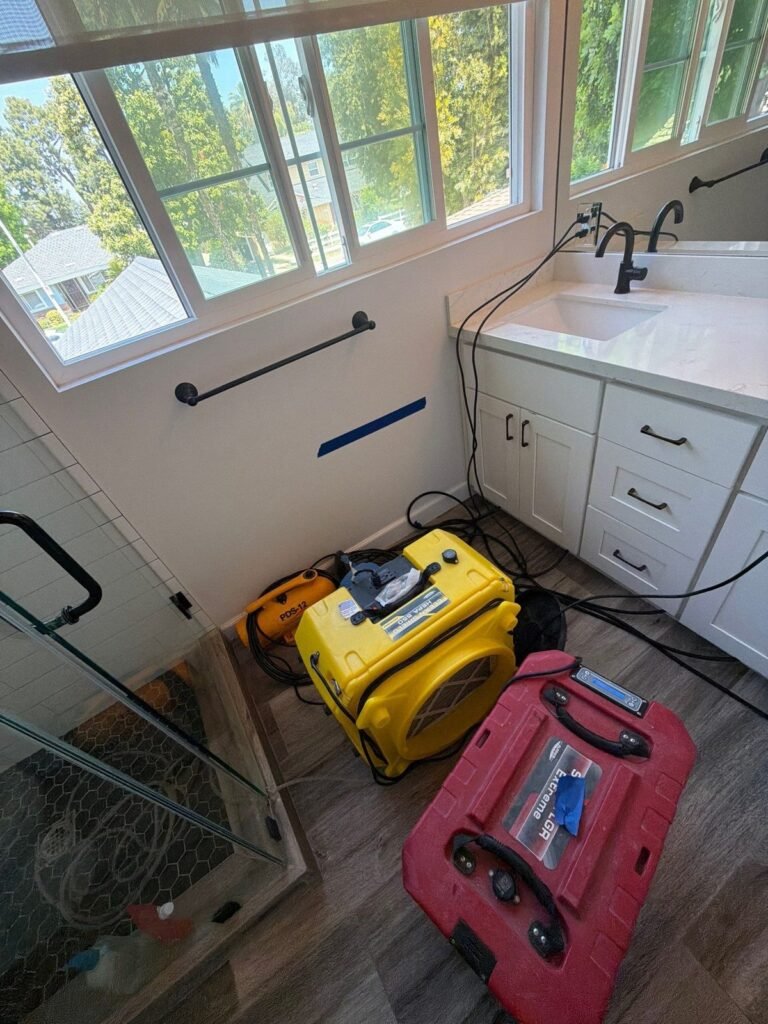
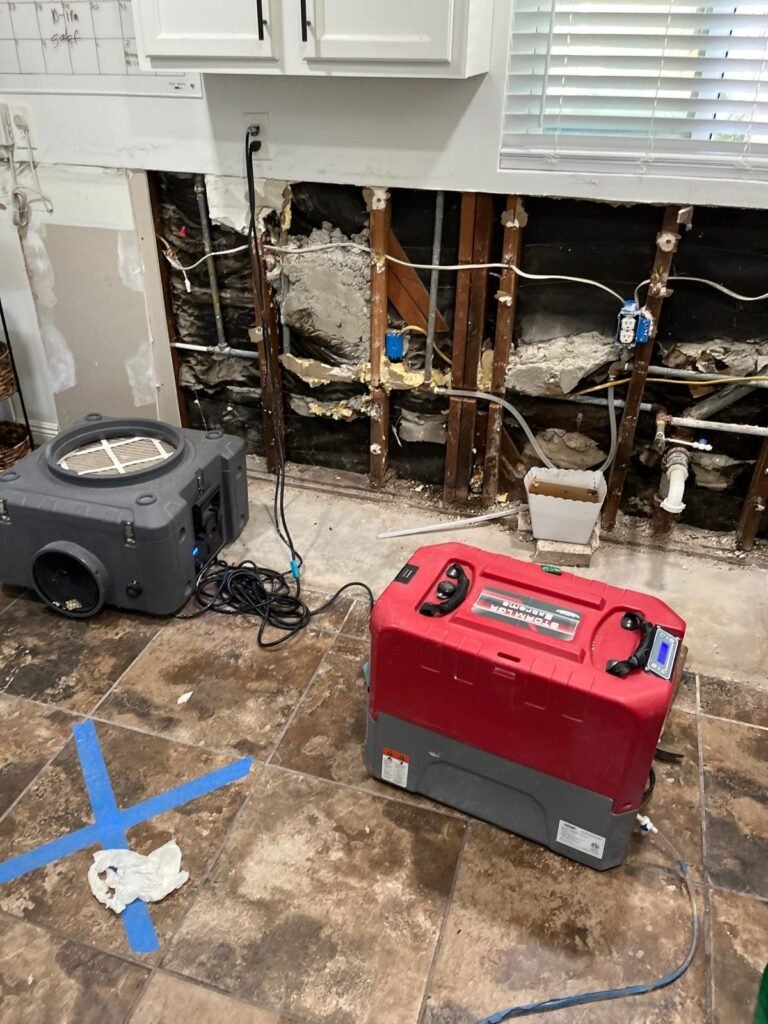
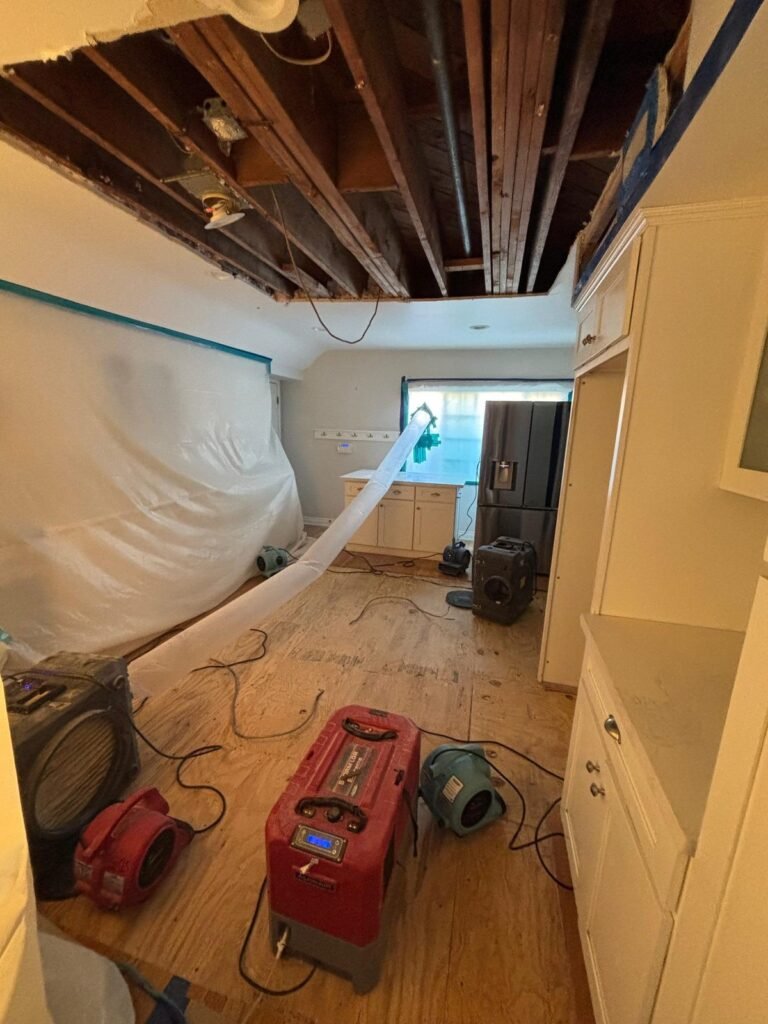
Equipment. Air movers and dehumidifiers, each machine against each day it sat on your floor.
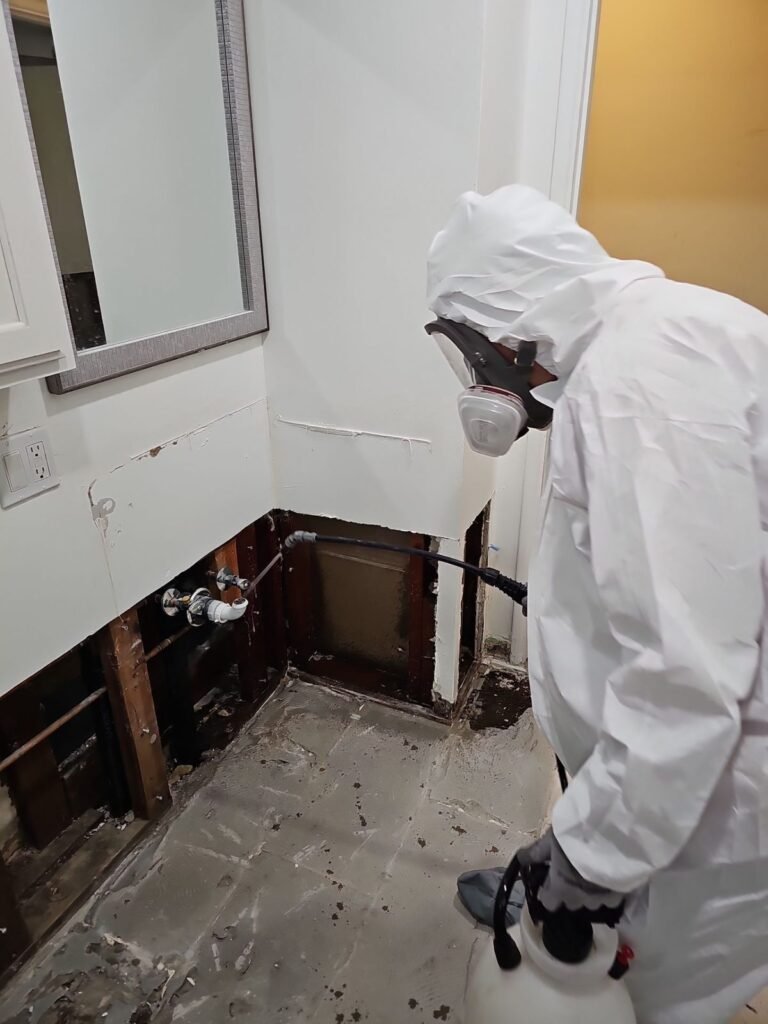
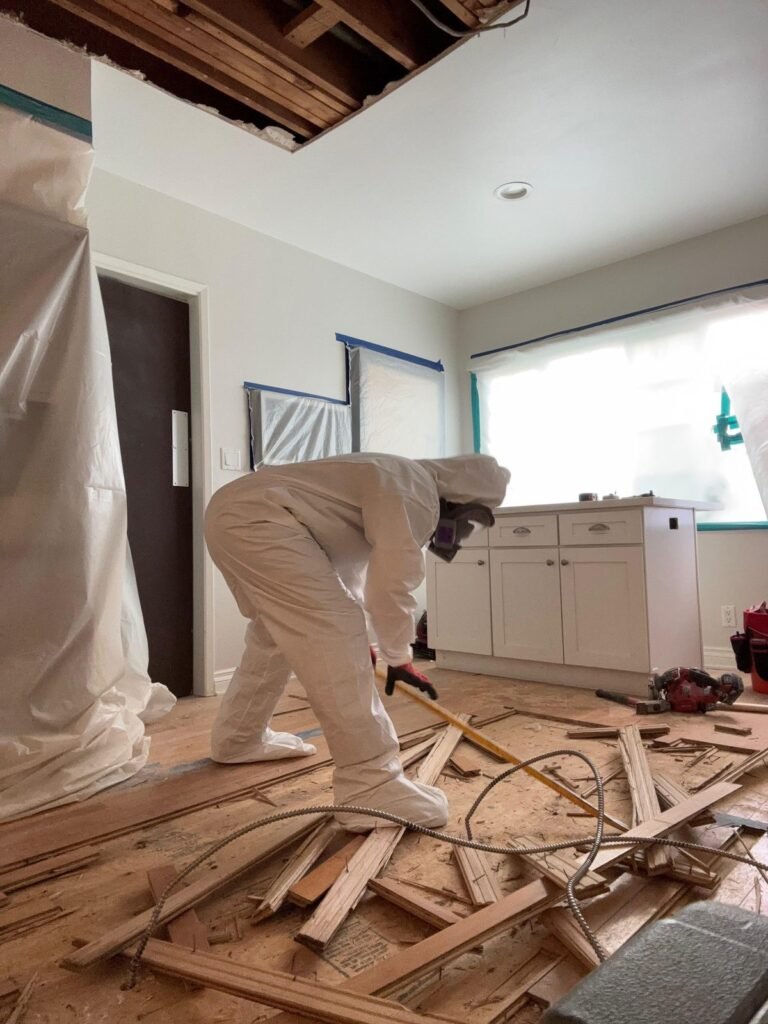
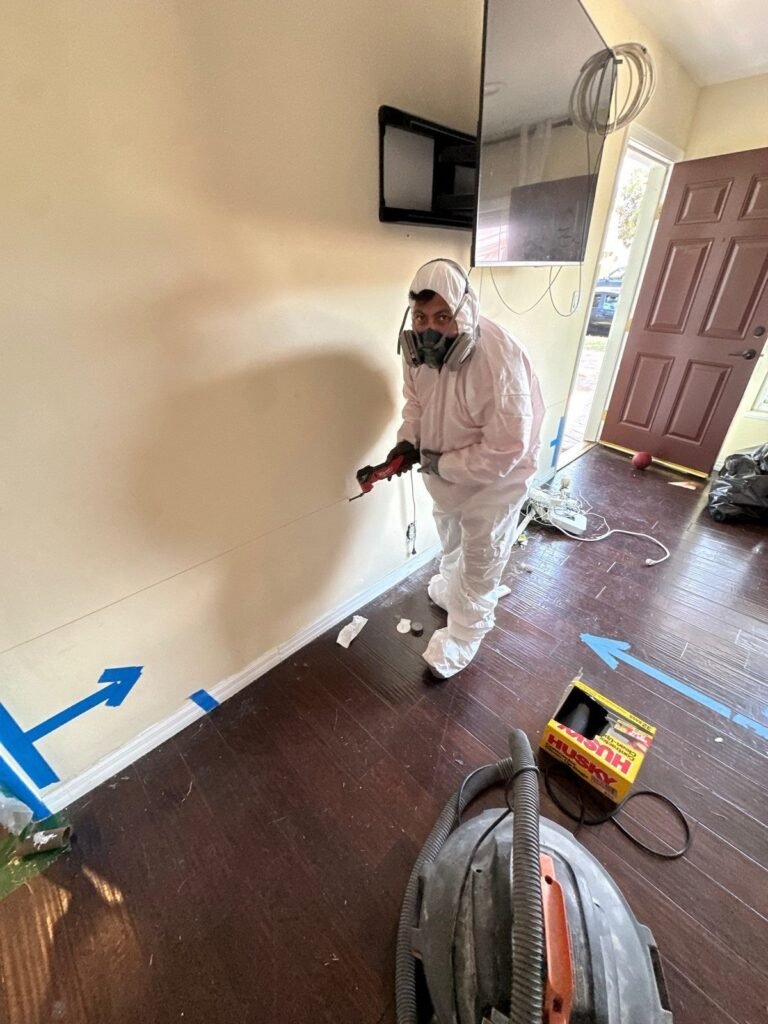
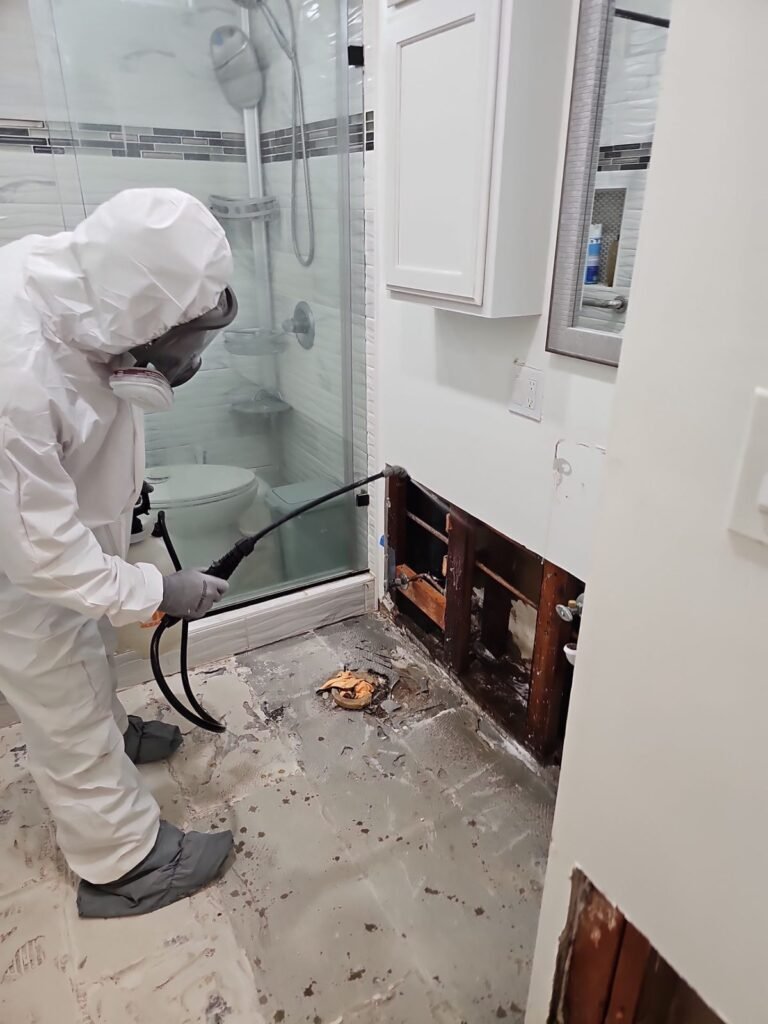
Demolition. Square footage of drywall, flooring, insulation, and cabinetry removed.
Disposal. The volume of it, and the dump ticket behind it.
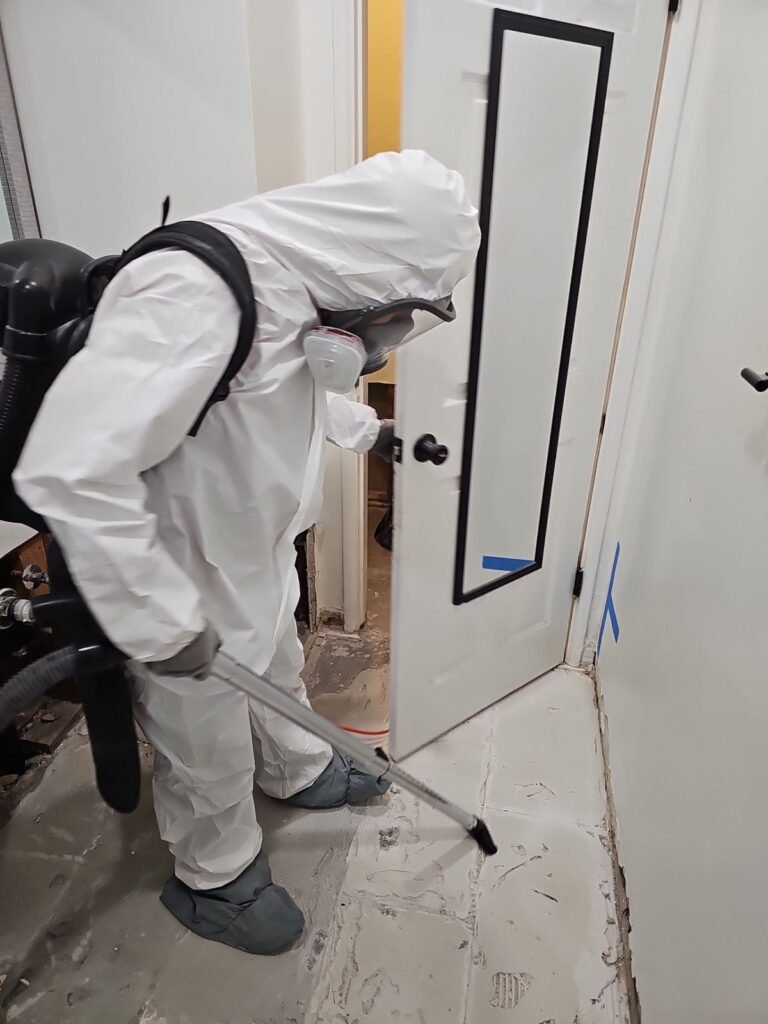
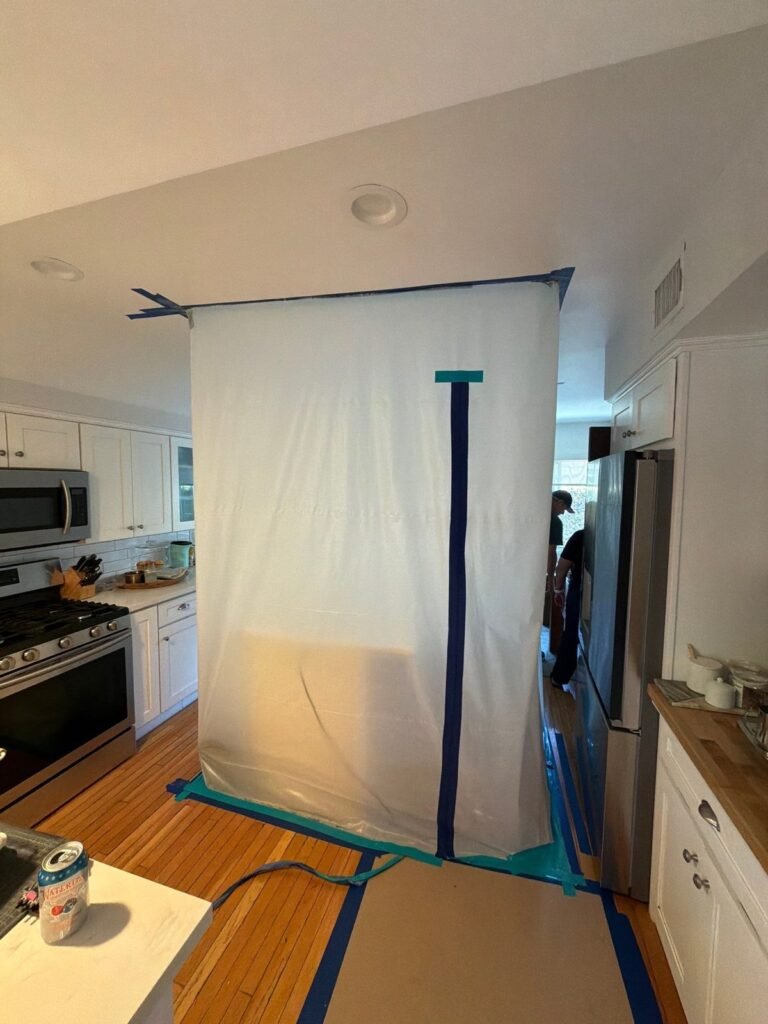
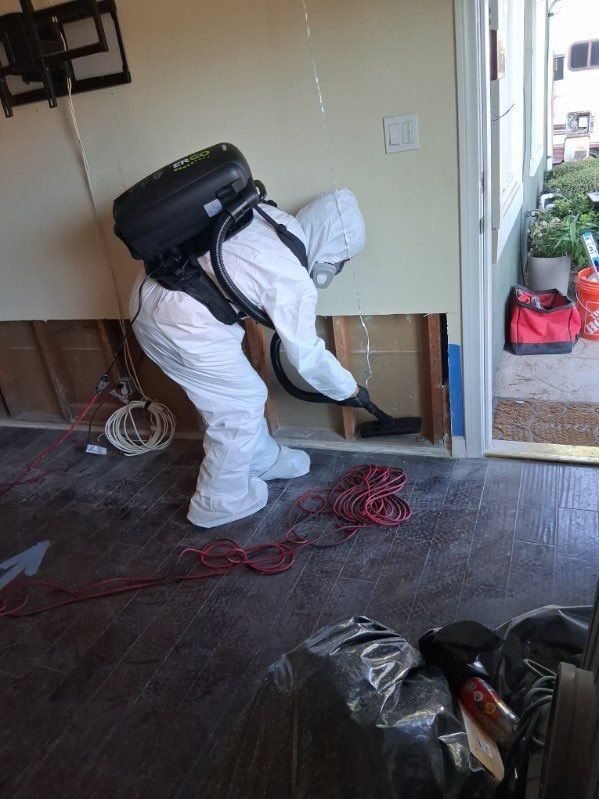
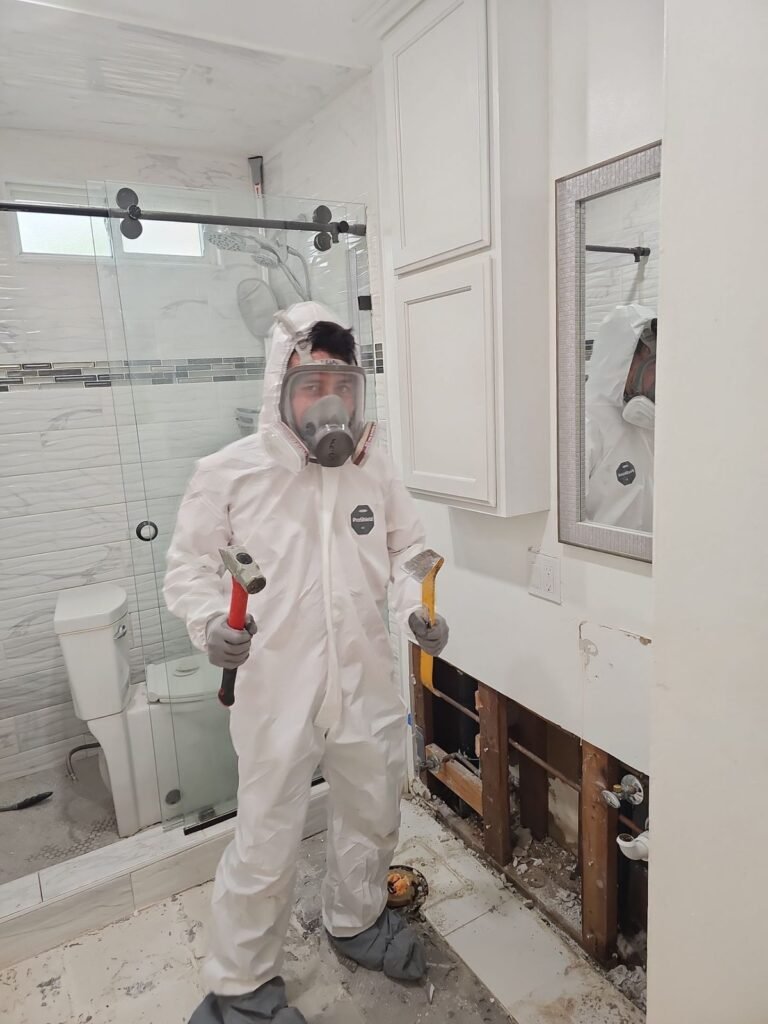
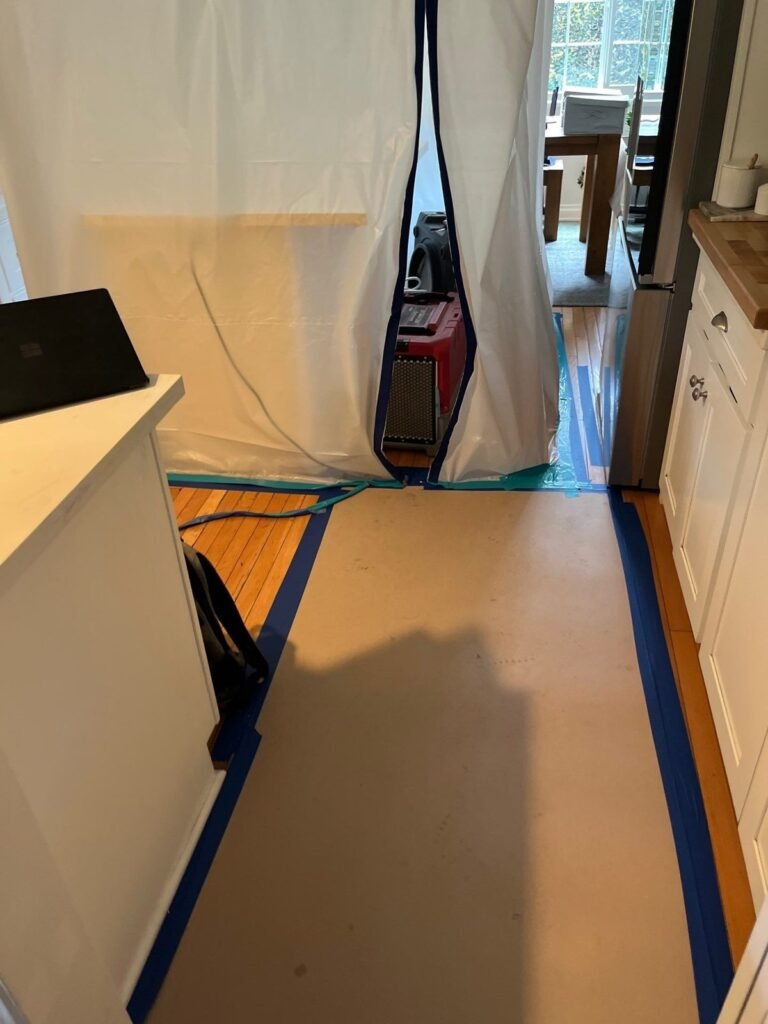
Materials. Sheeting, tape, zipper doors, antimicrobial, suits and respirators when the water was dirty.
Documentation. The drying log, the daily readings, the photographs. Some firms bill that out, some bury it in the hours. Ask which, because you buy it either way.
On an older building one more line appears, and it is not ours to keep. It is the fee the Ventura County Air Pollution Control District charges to accept an asbestos notice, at cost.
Its Rule 62.7 governs demolition and renovation across this county. Unlike the federal standard, it reaches ordinary single-family houses. That is why the notice gets filed on jobs most people assume are far too small to need one.
Does it cost anything to have somebody come out and look?
No, and nothing is owed at the end of it either.
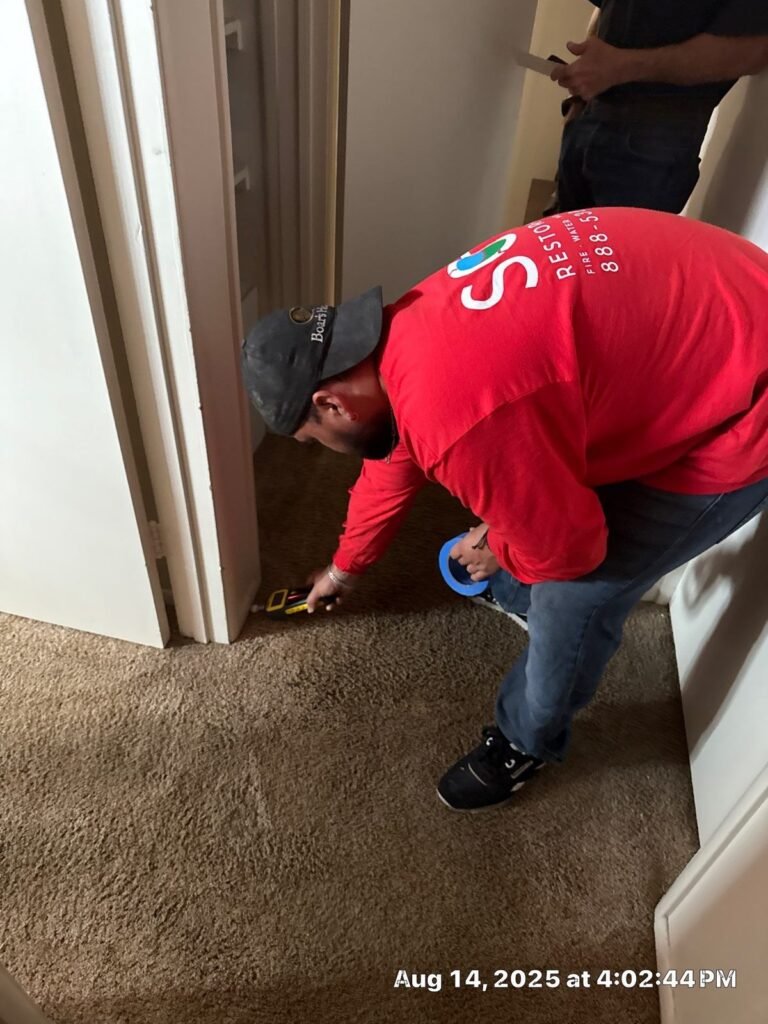
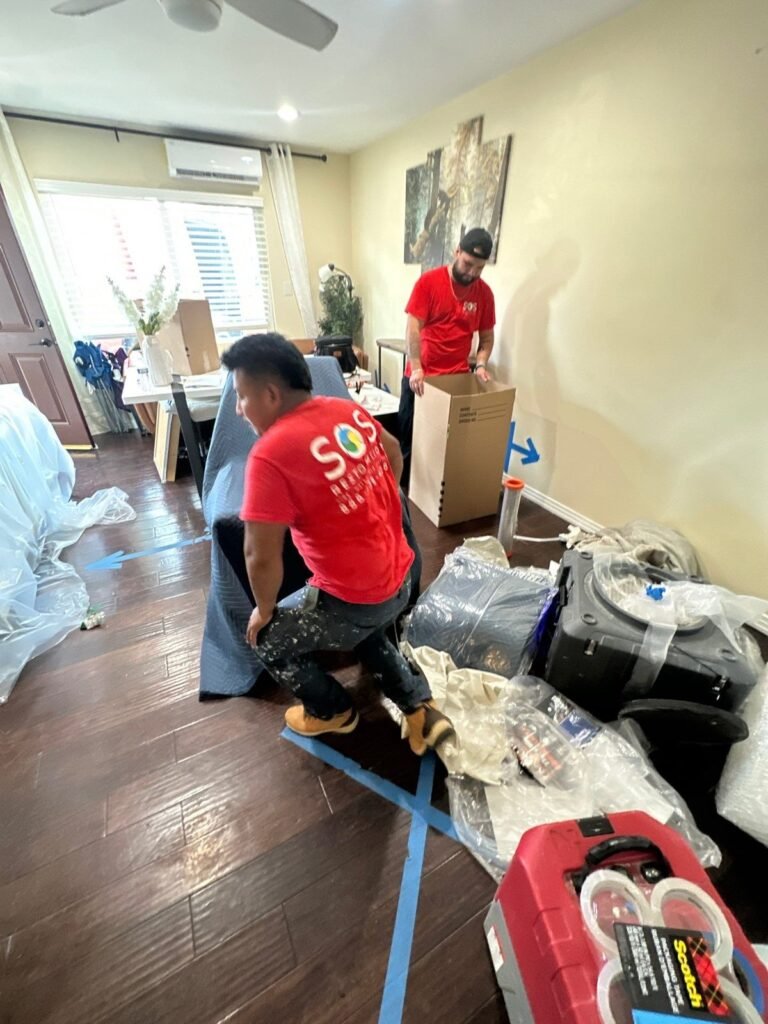
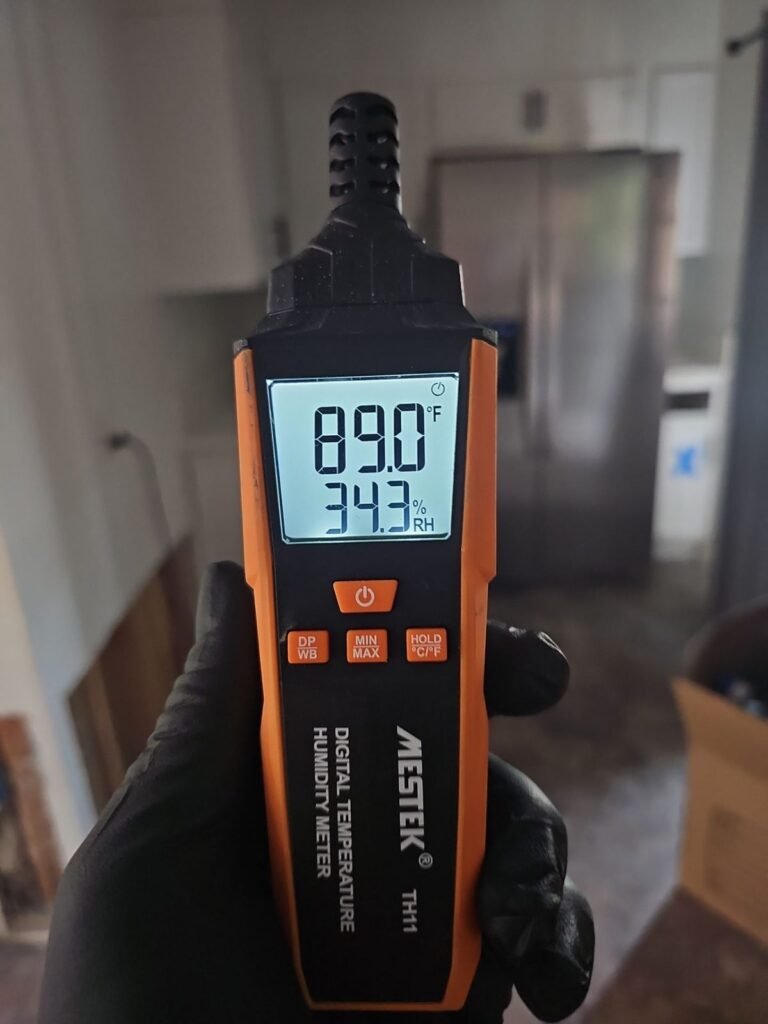
The technician on site meters your walls and tells you what is wet and what only looks wet. That reading is yours to keep, and sending our crew home afterward costs nothing and signs nothing.
Size is the first test. The EPA draws the do-it-yourself line for mold at roughly ten square feet. That is a patch about three feet on a side. A toilet that overflowed onto tile and got mopped within the hour is a fan and two days’ attention.
The same agency is blunt about what cannot be saved. Soaked fiberglass or cellulose insulation and wet ceiling tile get discarded and replaced, not blown at.
Drying inside 48 hours guarantees nothing by itself, since growth may already have started. Carpet and pad run on a 24 to 48 hour clock. Hence right now, rather than whenever the week allows.
My house is from the sixties. Does that make it cost more?
Yes, and the reason is the date on the building rather than the size of the leak.
A lab has to answer before a saw moves in a house that age. The machines keep billing through the wait. Our guide to the material that has to be tested before anyone opens a wall lays out that part.
The federal lead rule attaches to 1978, and its small-job exemption is narrower than people assume. It stops at six square feet of painted surface per room indoors, and twenty outdoors.
The square feet add up across thirty days instead of per visit. The exemption never applies to window replacement or demolition. Pull one window in a pre-1978 house and the whole rule lands on the job.
Here the county splits in half. Housing built before 1960 runs 37.2 percent in Ojai and 33.8 in Fillmore. It is 30.2 in Santa Paula and 26.1 in the city of Ventura.
Against that, Camarillo sits at 5.1, Thousand Oaks at 4.7 and Simi Valley at 4.4. Seventy percent of Ventura city housing predates 1980; Camarillo, 49.9 percent. Change the city and the containment line moves with it.
Everybody else posts a price range. Why is that a bad sign?
Because a range printed with no license number beside it is a guess nobody has signed.
We read twelve restoration pages ranking in this county before writing this one. Ten say nothing at all about money. Two publish figures, and neither publishes a state license number anywhere on its site.
That is the pairing to walk away from. Bold enough to print a price, not bold enough to print the number saying who printed it.
One of them runs the same average, to the dollar, on a beach city page and an inland one. It blames coastal humidity in both. That is not a local average. That is a template with a city variable in it.
Beneath that layer sits a newer one. Machine-written sites with invented ranges, and a suite number at a building holding no office of theirs.
The strongest competitor here refuses to guess and gives a reason. The reason is right as far as it goes. A real figure needs somebody standing in the room. We agree, and go further.
The rate is published below. The construction license is CSLB #1131134 and the mitigation side IICRC #70194273. The quantities multiplying those rates get measured at your address first.
Will insurance pay for it, and what if the water came from outside?
Your carrier decides that, and one word decides which conversation you are even in.
We measure, photograph, log, and itemize. That way the case folder behind every line reads clearly to a stranger who was never in the room. That folder is what the money gets decided from.
One distinction decides which conversation you are even in. A standard homeowners policy does not cover flood. That is a separate federal policy, bought ahead of time.
Hardly anybody here carries one. The mapped high-risk flood area of Ventura County holds 7,333 homes, and 2,264 flood policies cover them.
The mapped line is not where the water goes, either. Of the 1,331 flood claims ever paid here, 535 sat on properties mapped outside the high-risk zone. That is two in five, roughly twice the national share.
Santa Paula holds two fifths of its land inside that zone, more than any other city here. What helps a claim, and what usually sinks one, sits on the claim page.
Can I see the whole rate card?
Here it is in full, the same card the crew works from.
Every rate is a starting point that depends on the job. It depends on wet footage, machine count, and how long the readings stay above target. It also depends on how much comes out before anybody reaches the wet part.
Service
Rate
Water damage restoration
$61 an hour
Residential restoration
$61 an hour
Restoration company work
$61 an hour
Water damage repair
$69 an hour
Water restoration
$69 an hour
Water damage cleanup
$79 an hour
Flood damage restoration
$79 an hour
Emergency call-out and extraction
$90 an hour
Structural drying
$90 an hour
Dehumidification
$90 an hour
Basement and crawlspace flooding
$90 an hour
Mold, black mold, and mildew removal
$90 an hour
Odor removal
$90 an hour
Storm damage restoration
$90 an hour
Fire, smoke, and soot cleanup
$90 an hour
Smoke odor removal and fire debris
$90 an hour
Disaster cleanup
$90 an hour
Two things sit outside it deliberately. Anything leaving in a truck, carpet pad and cut drywall, gets a line of its own at cost.
And the rebuild is quoted as one settled total, never by the hour. That is the only lawful way to sell construction here.
Where does our invoice stop and the next one start?
Ours runs from the first hose to the day the readings hold flat.
Hours on site, and every machine against every day it ran. The material pulled off to get at wet framing, and the cleanup after.
The rebuild opens as a second document at one settled total under CSLB #1131134. That way one company works both halves, and no square foot gets paid for twice.
What neither sheet buys is three signatures, and not one of them is ours to write.
The name on the permit card. A field inspector writes it after walking the work. Ours is the application, the fee, and building what the plan reviewer approved. Passing is his call, on his morning.
The name at the bottom of a lab report. An analyst signs it beside a sample number. Material nobody sent to a lab has nobody to sign for it, so the paperwork calls it untested and the crew works as though the answer were yes.
The name on the check. Your insurance company writes that one, and the figure beside it, off the record we hand over: dated readings, photographs taken before anything moved, quantities, dump tickets. Hard to argue with. Still no vote.
The fourth is yours, on a contract of its own. Cabinets better than the ones that came out are welcome and priced apart. A wish list riding inside a claim is how the honest lines on it get pulled apart.
One last thing, the one people skip. Fix whatever leaked. If the source keeps running, the whole bill comes around again. That trip is nobody’s courtesy call.
How much is a water damage job going to cost me here?
Water damage work opens at $61 an hour. Emergency call-outs open at $90 an hour. Both are floors rather than quotes.
Everything above them is a set of quantities measured at your address. That means the footage that actually got wet, and the machines a room of that shape needs. Then the days they run, and each truckload of ruined material leaving the property.
Five things swing a total harder than anything else.
How far the water traveled, always wider than the stain you can see.
How many hours passed before somebody pried a baseboard off and looked.
Whether it arrived clean, dirty, or out of a sewer line.
How many fans and dehumidifiers the layout takes, and how long the readings stay high.
The year the building went up, which swings the paper harder than the leak does.
Of the 294,651 homes in Ventura County, 165,876 went up before 1980. At 56.3 percent, it is nearly a coin flip whether yours is a drying job. Or a drying job wrapped in rules about what may be opened, and after which paper clears.
Coast or backcountry, we come ready for it
Water damage
We pull the water, dry the walls and floors, and show you the readings that prove it. Ventura County, any hour, from $61 an hour. (805) 427-9039.
Sewage backup cleanup in Ventura County: what leaves the house, how the wet line is measured, and who puts the room back. Call (805) 427-9039, day or night.
The hourly rate is the same wherever the crew ends up. The address changes the permit counter and the age of what is behind the wall. It also changes how far the drive runs on a wet night.