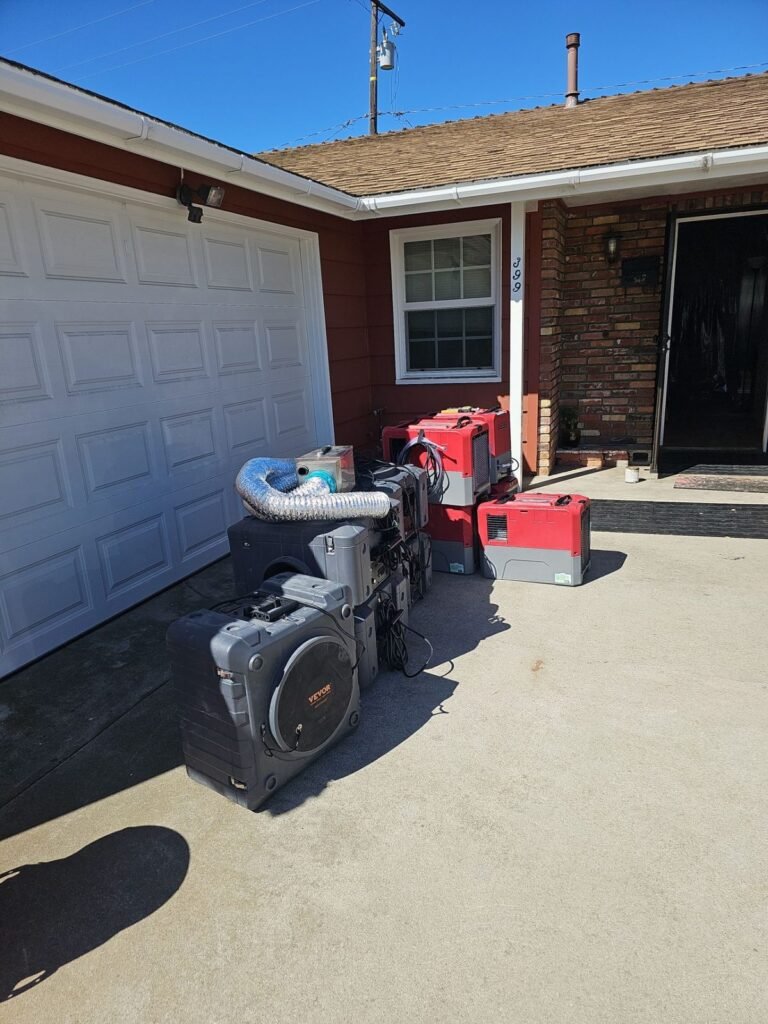
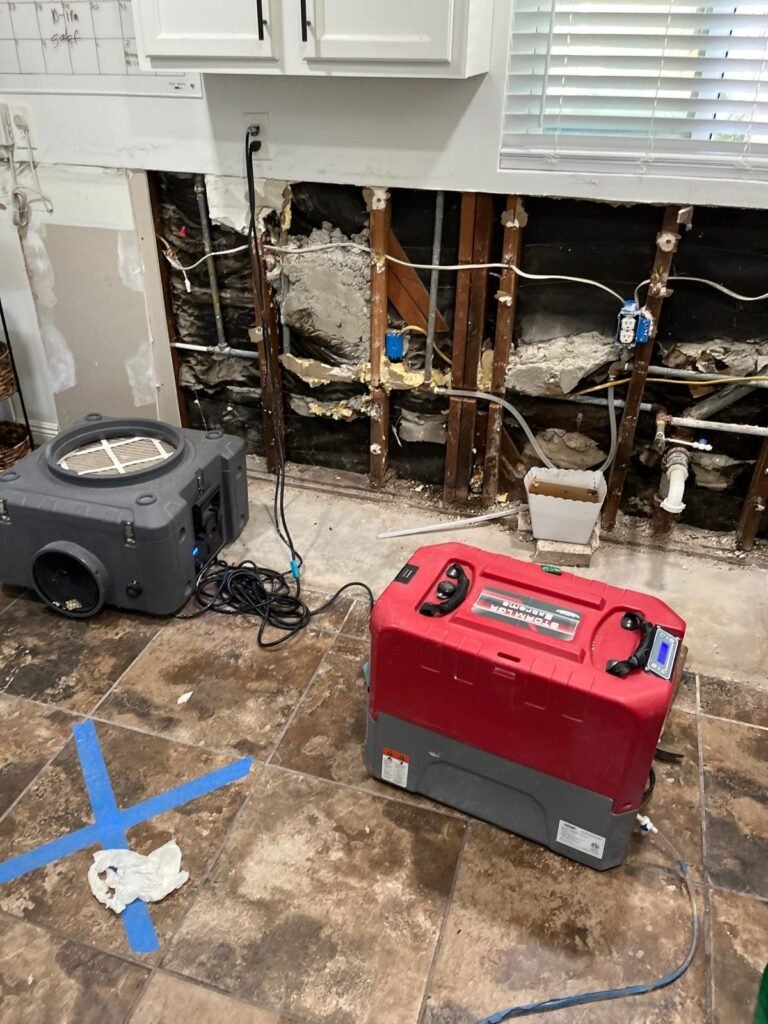
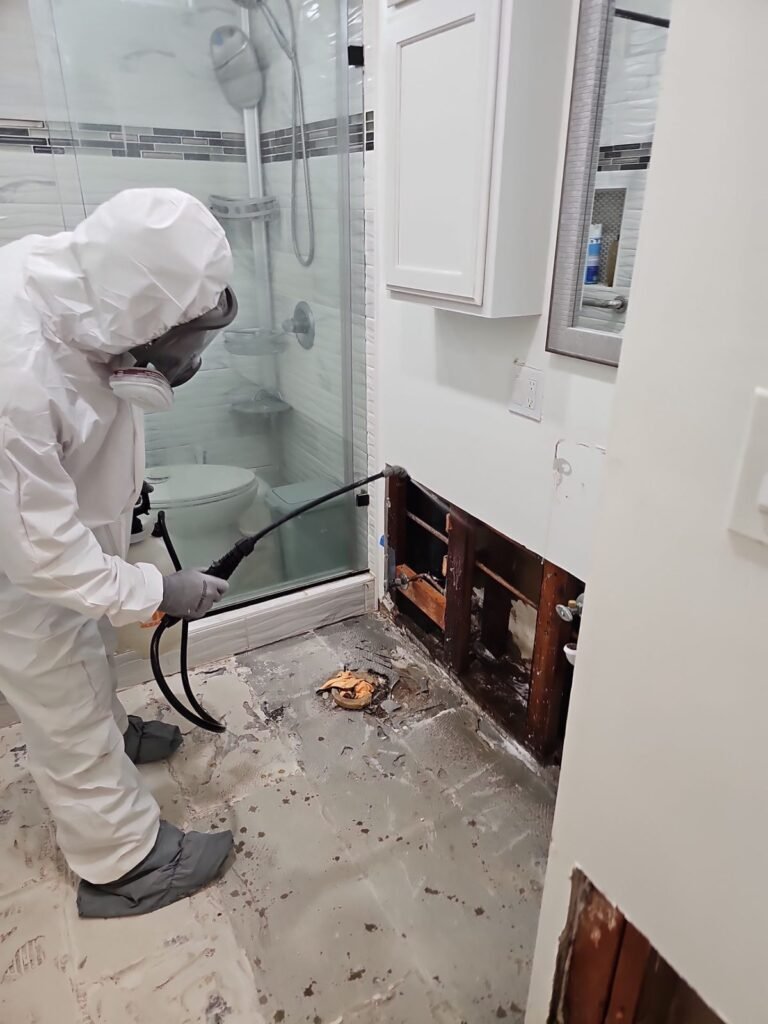
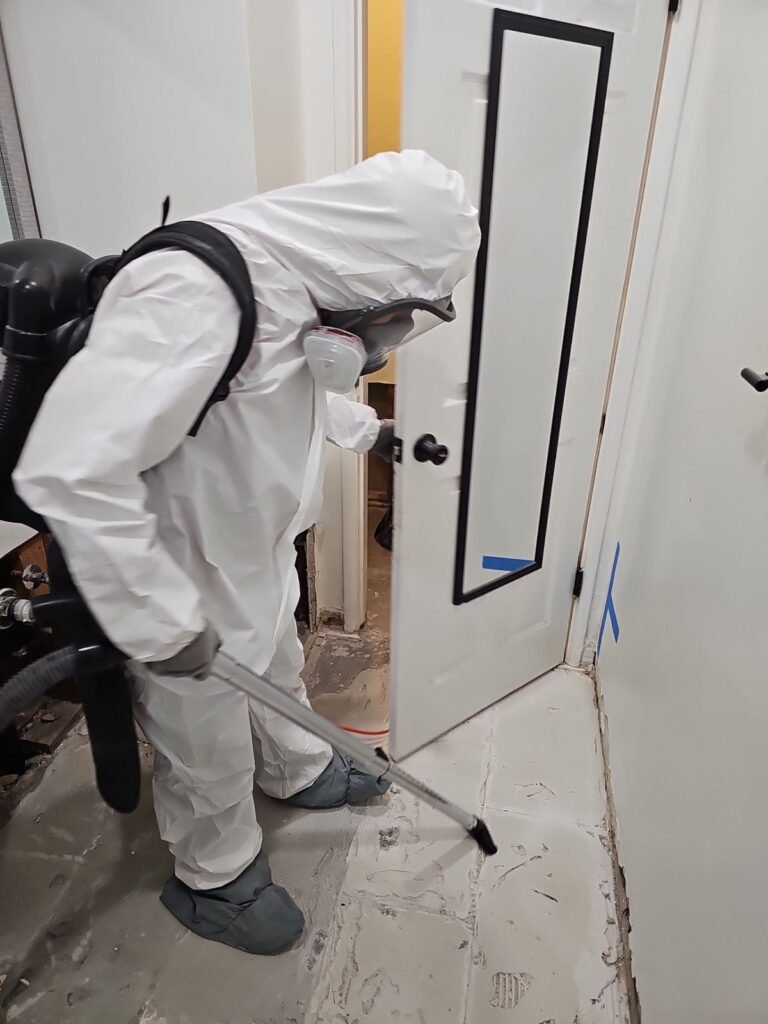
SOS Restoration of Ventura County covers six kinds of work in Simi Valley: water, sewage, smoke and fire, storm, mold, and the reconstruction that puts drywall, texture, paint, doors and flooring back. Our nearest crew comes out, reads the walls with a meter, and tells you what is wet before anybody prices anything. Nobody is charged for that. (805) 427-9039.
Close the valve on the heater, then the main on the street side of the house, and call before you start lifting boxes off the floor.
The number is (805) 427-9039. A fifty-gallon tank crosses a slab in minutes and keeps traveling under the bottom plate, which is why the garage looks like the whole story and the bedroom behind that wall ends up open.
Who decides has a short answer here. Four Simi Valley homes in five are single-family, 32,278 detached and 3,816 attached, and 72.9 percent are owner-occupied, so there is rarely a manager or an association between you and the choice.
One local detail costs people money every year. The city’s no-permit list lets you swap a fixture or an appliance when no new water line or drain is involved, then names the water heater as the one exception: installing, replacing, or moving one always takes a permit. We do both halves of this, cleanup and reconstruction, so nobody hands you a phone number at the end and wishes you luck.
Simi Valley draws that line by naming jobs, not by measuring them.
Its code carries no square-footage allowance for drywall, so a free-repair threshold quoted to you is a rule this city never wrote. The ten-square-yard figure that circulates online does not exist in a single municipal code in this county.
The city does publish a closed no-permit list, and after a loss only a few lines apply: paint, wallpaper, and similar finish work, and retrofit windows and patio doors. Then it lists what does, and a water loss walks straight into that: stucco and sandblasting, non-retrofit windows, bathroom and kitchen remodels, any electrical, plumbing, or mechanical alteration, and reroofing.
On roofs the city argues with itself, one page setting the trigger above ten percent of total roof area inside twelve months, another above 100 square feet. We plan for whichever lands first.
The clock is published, which is rarer than it sounds. Counter review runs five to ten business days. Once a file is judged ready, an emailed link collects the plan check fee, review takes 20 to 25 business days, every corrected set takes the same 20 to 25, and issuance can add three business days after the last invoice is paid.
Now the part nobody else prints: this city publishes no emergency permit process and no guaranteed issue time for work after a disaster, so we will not invent one. We sequence around it, so drying, cleaning, and demolition finish while the drawings sit in queue and the rebuild begins the day the permit prints, under CSLB #1131134.
One fork catches people whose mail says Simi Valley. Addresses with that postmark can still sit outside the city limits on unincorporated ground: Santa Susana south of the Metrolink tracks, the streets around Box Canyon. Those permits come from the County of Ventura Resource Management Agency, whose east county work now runs out of Newbury Park. That line changes the agency, the forms, and the clock.
Work as though it is, until a lab report says different.
That year sits in the fattest part of this city’s housing stock. Simi Valley put up 11,255 homes between 1960 and 1969, a quarter of everything standing today, and 22,504 of its 45,290 homes went up before 1980. Only 2,239 predate 1960. The exposure here is not historic houses but postwar tract building: sprayed ceilings, joint compound, floor mastic, and stucco, from the years that material was ordinary.
Nothing comes off a ceiling of that vintage until a sample has been pulled and read, and what gets tested before a wall opens covers how that part runs.
It depends on your street, and two answers inside one city is a real administrative oddity.
About 60 percent of Simi Valley is served by Ventura County Waterworks District No. 8, which the city operates itself and whose board is the City Council under another name. The remaining 40 percent belongs to Golden State Water Company, a private utility. The district side delivers more than 23,000 acre-feet a year to some 24,000 connections through 357 miles of pipe, most of it imported by Calleguas Municipal Water District.
In the first ten minutes that stops being trivia: a broken main, a meter shutoff, or a pressure question goes to one utility or the other, and the numbers differ. It returns on paper too: among the outside agencies the city says may have to clear a permit are the fire department, the air district, the Ventura County Watershed Protection District, and whichever supplier holds your meter.
What moved was a requirement, not a channel.
The map changed in 2024. A physical map revision lifted 1,903 Simi Valley properties and more than 439 acres out of the special flood hazard area, close to a fifth of everything in it, while putting 53 properties in that had never been there. The maps it replaced had gone more than thirty years without an update.
The redraw follows five watercourses by name, bounded by streets you drive: the Arroyo Simi between First Street and Royal Avenue, Dry Canyon Channel past Cochran Street, the Erringer Drain past Kearney Avenue, Runkle Canyon past Arcane Street, and Tapo Canyon Creek up to Walnut Avenue. That arroyo is the head of Calleguas Creek. Even now, 7.9 percent of city land sits inside the mapped high-risk zone.
Alongside the good news the city repeats FEMA’s own figure: close to a quarter of flood claims land outside the mapped zone. Coming off the map ends a lender’s requirement and nothing else, and a standard homeowners policy does not cover flood anywhere in this state. Your insurance company reads your policy back to you; our part is documenting what got wet and how high it stood.
Removal does. Smoke odor is particles, not a mood, and fragrance only hides it.
The Sandy Fire started off Sandy Avenue in 2026, burned 2,183 acres and was fully contained nine days later. One structure was lost and two were damaged, and that ratio is the point: almost every call afterward came from a house that never caught, yet filled with soot, ash in the returns, and an odor that comes back on the first warm afternoon of the following season. The incident report belongs to the Ventura County Fire Department, because this city runs no fire department of its own.
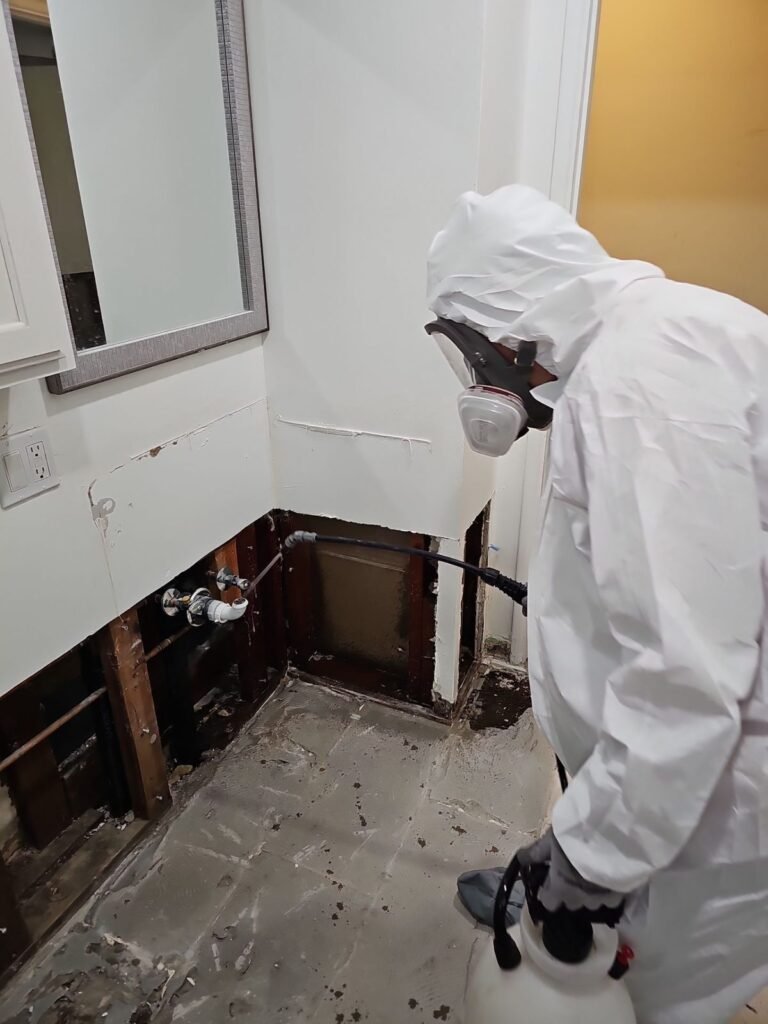
The work is dull and physical. Hard surfaces get cleaned in an order that lifts soot instead of grinding it in, filters and ducts come into the job because that is where a house stores the smell, and porous material gets treated or leaves. Paint over soot and you have bought a week.
Mud, and less rain than you would think.
The USGS published its reading of the Sandy scar in 2026: across the burned basins, a third of an inch of rain inside fifteen minutes, 0.329 inches at a peak intensity near 1.32 inches an hour, is about a coin flip for debris flow. The scar covers 3.4 square miles and faces its first wet season this winter. That is not a named storm. That is one ordinary winter cell over the north side of town for fifteen minutes.
What reaches the door is not water. Ash, sediment, and rock in suspension do not drain the way a supply line does. It gets shoveled, framing gets washed and metered, and most porous material it touched leaves the house. The drying half of the work reads the same across the county; the loading does not.
This ground keeps a record. The 2003 Simi Fire is the only entry in the city’s own safety element table logged at a distance of “within the city”, and it destroyed 37 homes against 278 outbuildings, the signature of a valley edge with deep lots. The ridge the Easy Fire burned by the library in 2019 sits in the state’s top fire-threat tier. The Santa Ana winds here are a design condition, not a footnote.
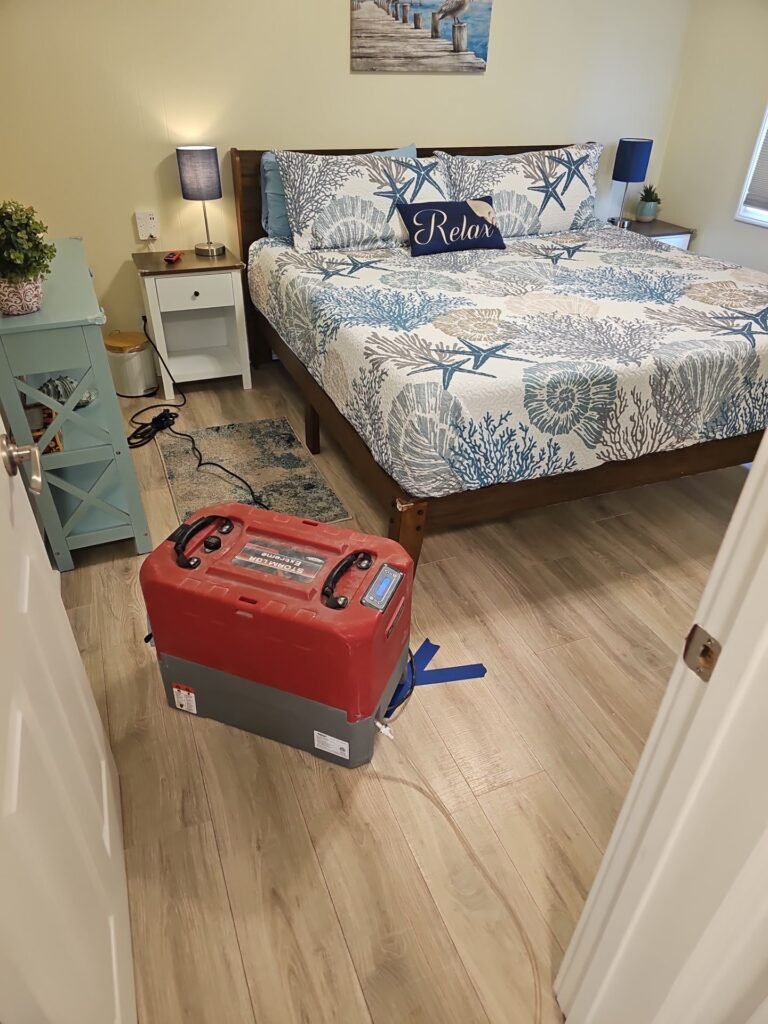
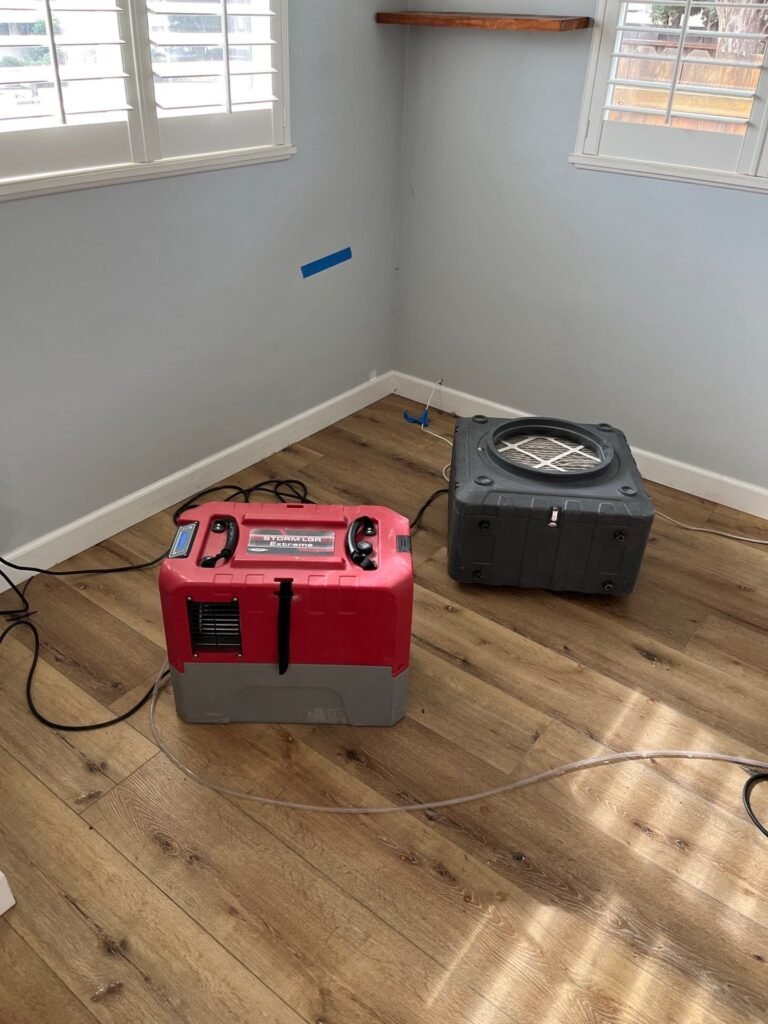
Kill the water, leave the wall shut until a meter has been on it, and resist cutting to look.
A slab leak under a tract house here is rarely young; it has soaked the pad for weeks before paint bubbles or the floor goes warm underfoot. The two decades that built most of this city, the sixties and seventies, set more than 20,000 homes on concrete with the supply lines beneath.
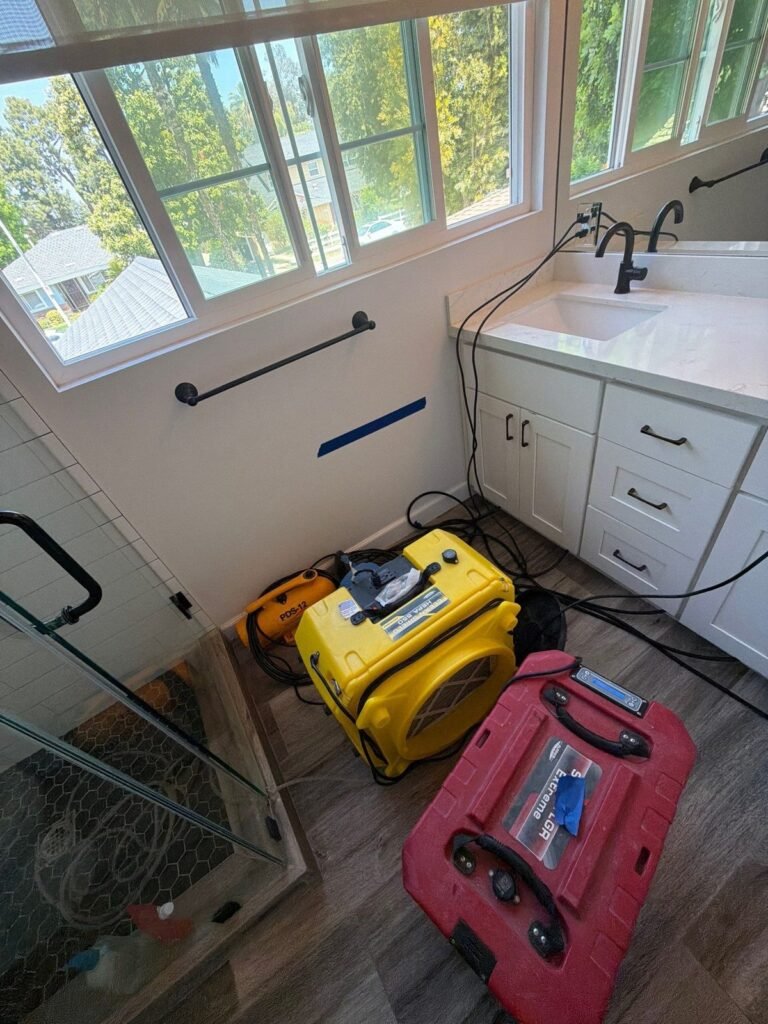
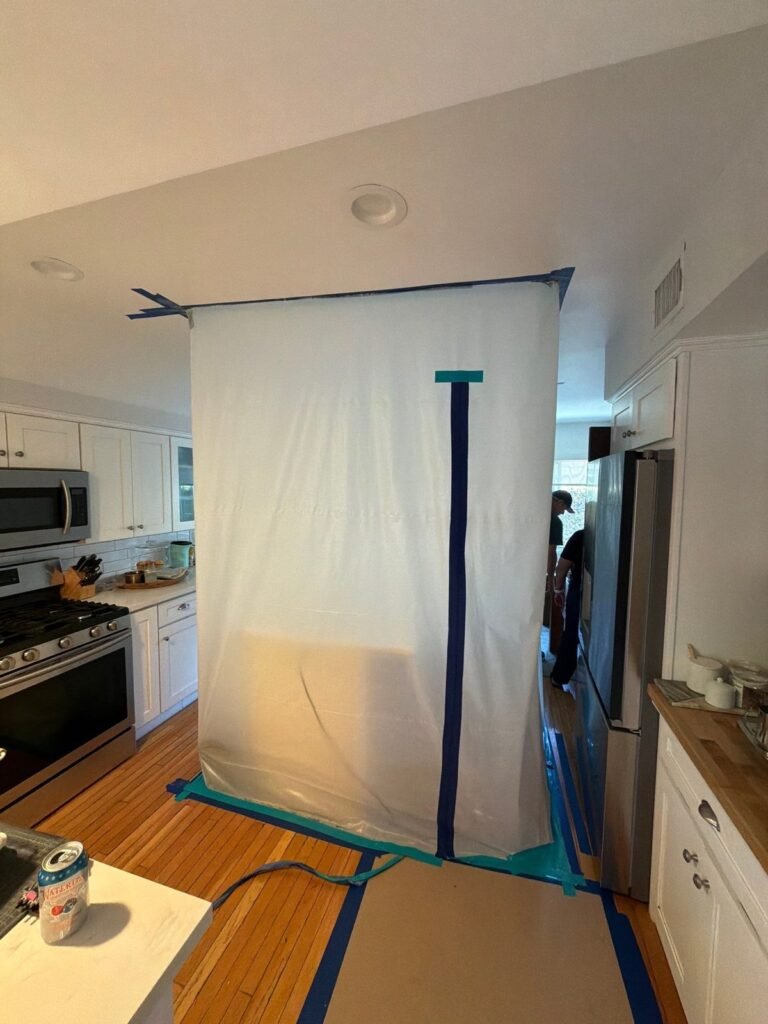
Finding the edge of the wet comes before anything opens. Meters and a thermal camera show where the water stopped, the room gets sealed so demolition does not carry spores into clean rooms, and whatever stays wet leaves the house. Color tells you nothing about species, and species would not change the removal. We read no lab sample and certify no result we did not pull.
Rerouting a line out of the slab is a plumbing alteration on the city’s list, and that permit is ours to pull.
Dry is a milestone, not the end of our part.
The crew that hauled the wet material out comes back to frame, insulate, drywall, texture, paint, and reset cabinets and flooring. That half arrives as one written total agreed before demolition starts, because state law will not let a rebuild be sold by the hour. Only mitigation runs on a clock, under IICRC #70194273.
What snarls the back half is rarely the work. It is a question pointed at us that lands on somebody else’s desk. Coverage is the usual one: the company standing in your wet room gets no vote in what a policy pays. Your insurance company writes that alone. So we hand over evidence instead of an opinion: what each room metered, and photographs shot before anything opened.
Two more arrive the same way. The signature that closes permit work belongs to a Simi Valley building inspector, and anyone offering to sign that off from the driveway is selling trouble. Anything structural waits on an engineer’s drawing with a seal on it. A kitchen you have meant to redo for years is its own contract, not a line in the damage file.
Tell us your cross streets and we will name the agency your parcel answers to.
Its own valley in the northeast corner, hot and dry, with the Arroyo Simi running through the middle of it and hills on both sides that burn.

Your phone number is the only thing we really need. Everything else just helps us send the right crew with the right equipment.
Call (805) 427-9039 whenever this is happening and tell our dispatcher which corner of Simi Valley you are on. What you want at the end is a slab that reads dry under the tile, a permit card with somebody else’s signature on it, and a bedroom you stop noticing.