
Water that crossed a farm field before it reached your floor is category three, the worst grade the trade uses. Across Ventura County the grade is fixed by where the water started. Not by how clear it looks in the hallway.
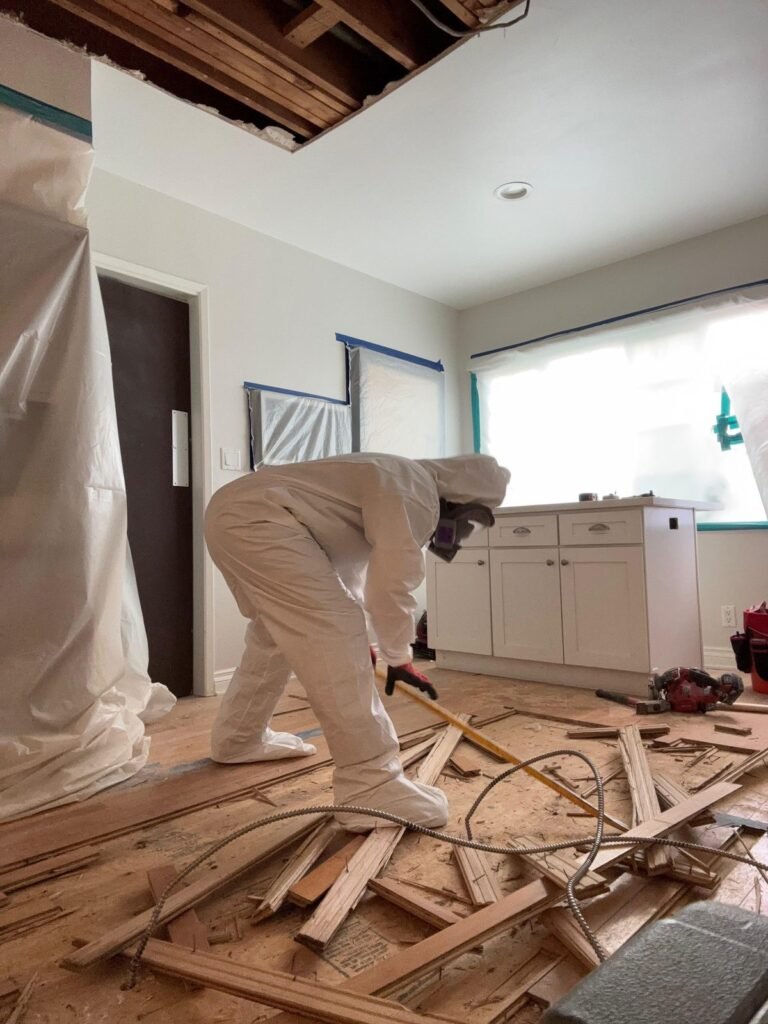
What is in the water, and nothing else.
There are three grades, and almost the whole scope of work hangs off which one you land in.
Grade one is water that left a sanitary line and picked up nothing on the way to the floor.
Grade two carries enough that sitting in it or swallowing it could make somebody sick.
Grade three is the contaminated tier. Sewage, anything that pushed back up past a trap, and any water that ran over open ground.
No. It comes from the standard the trade wrote itself.
No state agency adopts the grades or polices them. They still run your job anyway.
The scope, the estimating software behind it and the drying plan all speak that language. So does the folder your insurance company eventually reads.
A second number, the class, answers a different question. How much material got soaked, and how reluctantly each one parts with it.
Field water on a tiled entry and field water in a carpeted bedroom share a category and split on class.
The grade follows the origin, and open ground makes no claim.
Soil that has been worked, fed and sprayed all season is the opposite of a sanitary origin.
The water seldom arrives straight off the rows either. It gathers in a farm ditch, runs a culvert, crosses a road shoulder.
It lifts whatever is on the pavement before it ever turns onto a residential street. By your threshold it has been three or four different things.
No. Sediment drops out of a slow sheet of water.
What creeps to the far end of a hallway can look like it came out of a faucet.
It still carries every dissolved thing it started with. Nobody can say what is in yours without a laboratory.
The grade does not wait on a laboratory. It is assigned at the door, by origin.
Yes, and that half gets underestimated every time.
A runoff loss leaves two marks on your wall, never at the same height. The mud line shows where the flow slowed enough to drop its load.
The wet line runs well above it. Gypsum board and framing keep pulling water upward long after the flow stopped.
Silt behaves like a solid, which means no machine dries it.
It settles into carpet backing and packs the air beneath a baseboard. It fills the low bay of a subfloor and loads batt until it sags out of the cavity.
People on their knees with buckets, not equipment in a corner.
That is why a mud job and a clean-water job over identical square footage look nothing alike written up.
Dried silt goes on working against you too. A film left on a bottom plate holds moisture against the lumber and gives it back for weeks.
Which is how a wall can read dry one day and wet again three days later.
Under the floor, where nobody thinks to look.
Over a vented crawl space, runoff settles under the floor rather than on it. That describes most of the older housing in Fillmore.
In a manufactured home that same water finishes in the belly, the plastic membrane slung below the floor deck. The membrane holds it like a bag.
In Fillmore roughly one home in ten is manufactured, against about one in twenty-five countywide. This is not an unusual call here.
It can, and that catches people out.
The origin sets a floor under the grade, never a ceiling. Nothing downstream drags it lower, and several ordinary events push it higher.
Heat and time push it. Water that stood in a shut house over a warm weekend is not graded by the day it broke.
Travel pushes it too. Clean water running down a stud bay arrives carrying whatever lives in that cavity.
In an old house that is dust, rodent leavings and batt nobody has disturbed since it went in.
Yes. Old silt dried into the seams of a garage.
A garage or laundry room that took field water two winters back has silt along the base of the walls.
It is invisible until something wets it. Clean water crossing that floor dissolves the lot and comes up graded by what it found.
When the answer is honestly unclear, a crew works the worse of the two. Guessing high costs you a sheet of wall board.
Guessing low costs you the same wall opened twice, months apart, with whatever got sealed inside it.
Anything porous that drank grade three water.
The wick line is the height the water climbed inside the board. The mud line is where it stopped, and those are never the same.
You cannot clean the inside of something porous, which is the whole reason it goes.
Anything with a hard face, after two passes.
Framing lumber, sealed slab, tile bedded in mortar, metal, glass, solid wood casing and doors.
The order of those two passes is not a preference. A detergent wash lifts the soil off first.
Only then does an antimicrobial go down, because a disinfectant laid over dirt is disinfecting dirt.
It is the argument on every one of these jobs.
Boards that cupped sometimes flatten again over weeks of controlled drying. Grit driven into the seams does not leave with the water.
A floor can pass its readings and still be a loss for what stayed inside it.
In an older house, cutting waits on a laboratory result. Most of what stands in Santa Paula is older housing.
Three parties, and only one writes it down at the time.
You, the company doing the work, and whoever reviews the paperwork afterward.
A grade holds when it was written down at the start and backed with pictures. It wobbles when somebody assigns it from memory three weeks later.
Four things, and photographs come before anything moves.
Not water damage, but water that entered through a named wall, from the ground behind a named property.
The dry standard gets taken where the water never reached.
Two questions people run together constantly.
Water arriving across the ground from outside is usually a flood question rather than a plumbing one.
Which policy answers is wholly separate from what was in the water and what came out of the walls.
Keep them apart and you get to argue about one thing at a time.
If any of it came up through a floor drain, the rules change again. Sewage cleanup picks the story up from there.
Dry is the halfway mark, not the end.
The same hands that opened the room close it back up. Framing, insulation, subfloor, board and texture, trim, cabinets, paint, and the floor itself.
IICRC #70194273 covers the cleanup half and CSLB #1131134 the building half.
When the field water never crossed the threshold.
Silt on the driveway is a pressure washer afternoon. The grade only matters once that water reaches material that holds it. Wet stucco outside gives it back on its own. Wet drywall inside does not.
Three, and no promise of ours moves them.
A laboratory owns one. We can cut the sample and drive it over. What lands on the result sheet is written by whoever reads the slide.
Your insurance company owns another. Our end is a complete file the day the crew stops, and the coverage call comes back on their timetable.
The county owns the last. Work gets staged to finish before anybody knocks, but the inspection lands when it lands.
The rest of what comes up on a runoff loss sits in the guides.
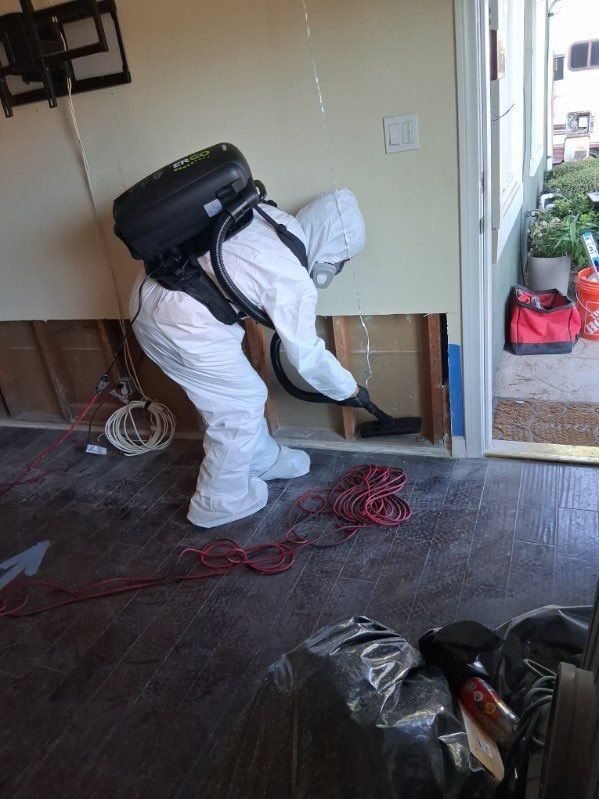
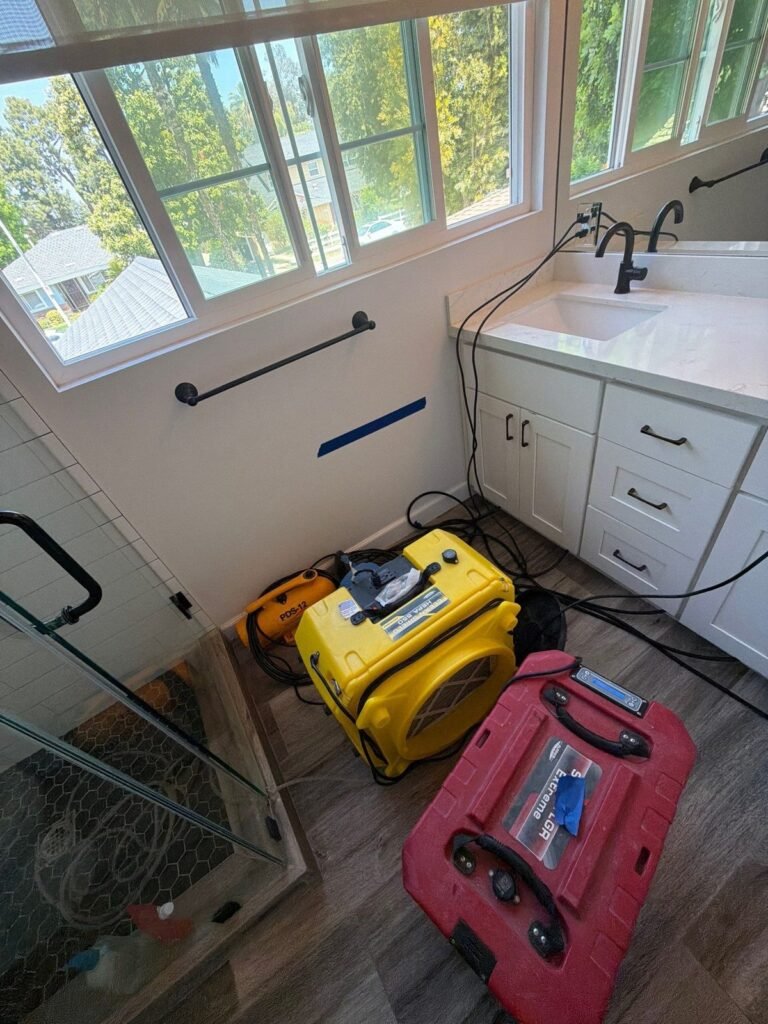
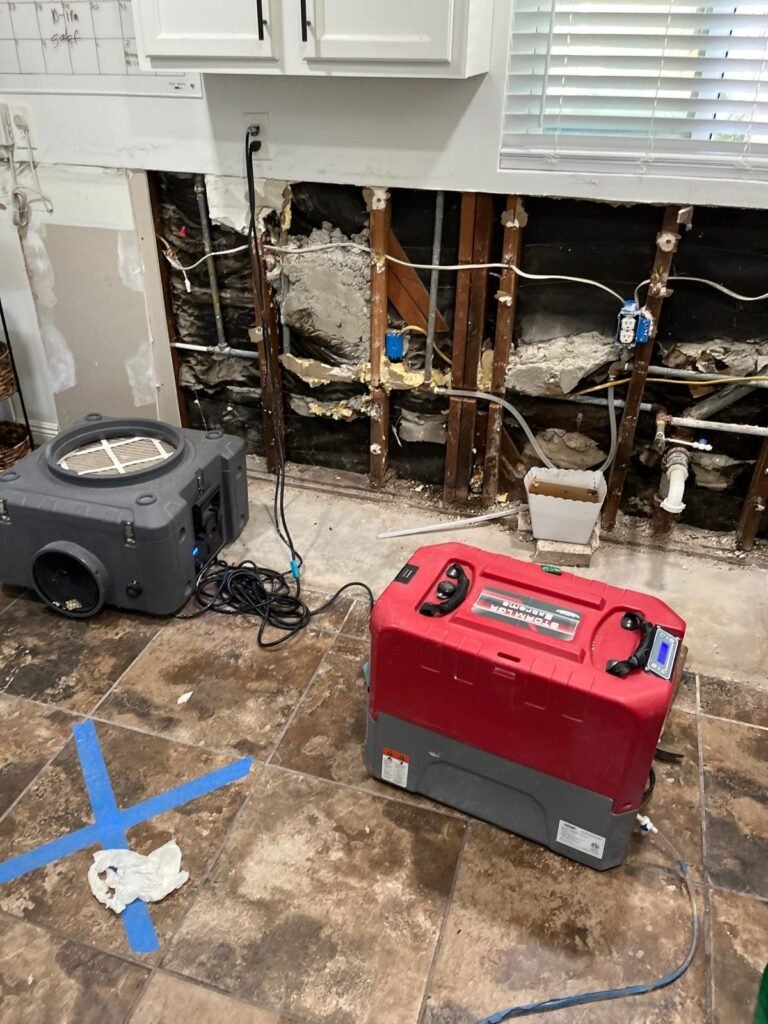
What you want at the end is a bottom plate with no silt left on it and a floor that stays dry the second week too.