In Fillmore the whole loss lands in one place: a wet subfloor, a backed-up tub, mold under a raised floor, smoke that came back later, storm damage, and the reconstruction that shuts the house again. Seven of every ten houses here went up before 1979, so the age of the building gets established on the first visit, before anybody proposes cutting. That visit costs nothing. (805) 427-9039.
Whoever can stop the water first, and then us.
Stopping the water and repairing what it soaked are two different trades. Fillmore is unusual in that its water is entirely its own: the city pumps, treats, and delivers everything from three wells strung along the Sespe, public system 5610002, and buys not one gallon from anybody. No State Water Project line runs into town and the city’s water report names no emergency interconnection.
So a broken main here is two problems at once, a service outage for the block and water traveling into the houses below it. If the break is in the street, that belongs to the city. If it is an angle stop, a water heater, or the supply line behind the washer, that belongs to a plumber.
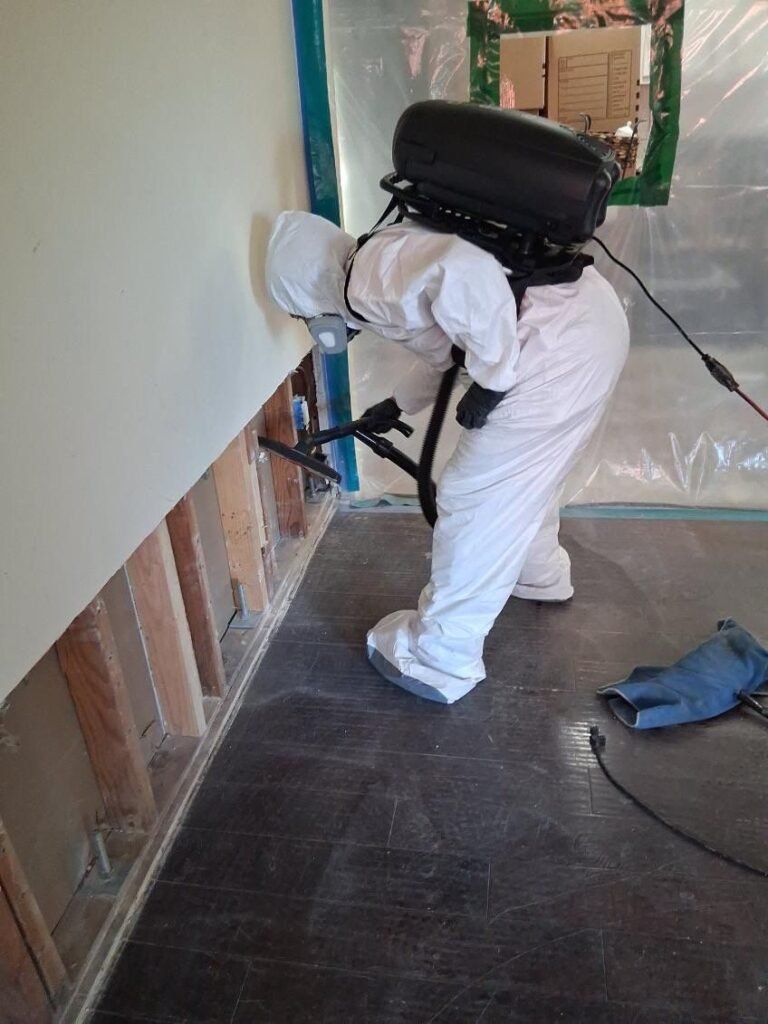
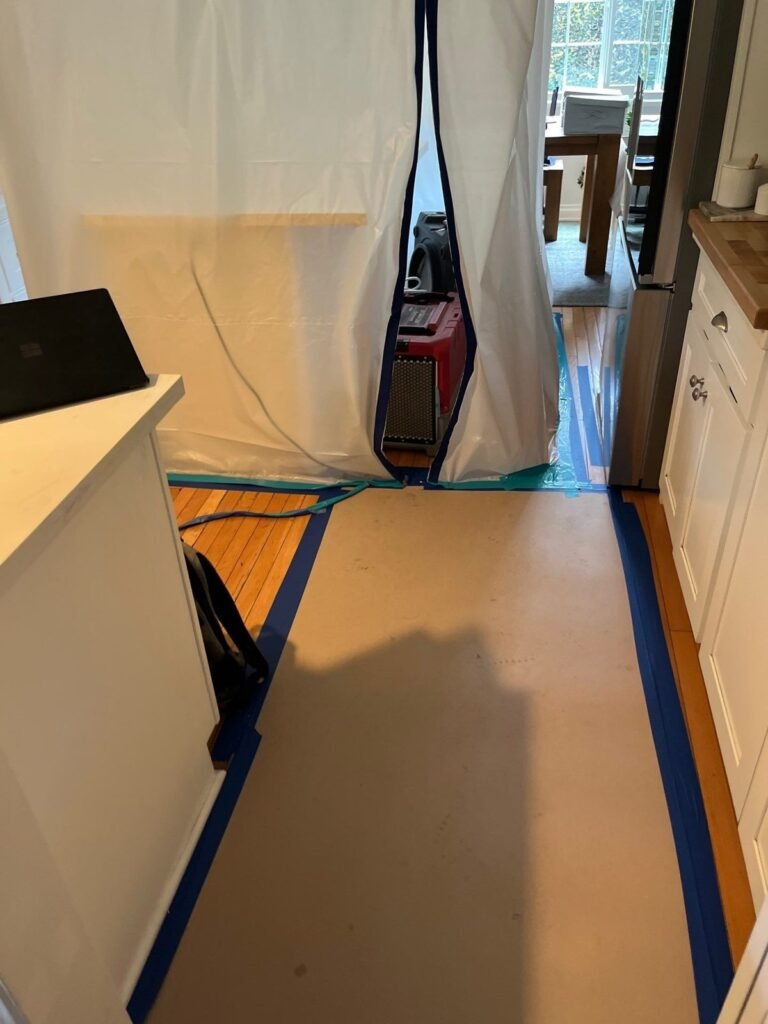
What the water is doing to framing, insulation, and subfloor is our half of the job, and it is the half that gets worse while the first two get sorted. The company on the other end of that number is SOS Restoration of Ventura County. Shut the valve, lift what you can lift, and call.
Both, and the levee is why that is not a contradiction.
Behind a levee is not the same thing as out of the floodplain, and in Fillmore that difference covers most of the town. Lay the current FEMA map over the city limits and roughly 39 percent of Fillmore’s 2,115 acres carries the Zone X label that reads, word for word, area with reduced flood risk due to levee. Another 18.8 percent sits in Zone AE, the one percent annual chance floodplain, most of it regulatory floodway. All told, 57.8 percent of this city is either inside the floodplain or dry only for as long as the levees on the Santa Clara and the Sespe keep holding.
That map took effect in 2024, the first full redraw since Fillmore’s original one dated 1978. Zone X triggers no mandatory purchase rule, which is why so few owners here carry a flood policy, and why the paid history looks so thin: 40 paid federal flood claims in 93015 across the life of the program, 24 of them from loss year 1978.
The town’s flood memory is nearly fifty years old. The creek’s memory is not. Sespe Creek near Fillmore ran 85,300 cubic feet per second in 2005. A standard homeowners policy does not cover flood, and that sentence still surprises somebody here in the first real storm of a wet season.
A sample goes to a laboratory before the wall opens, never after.
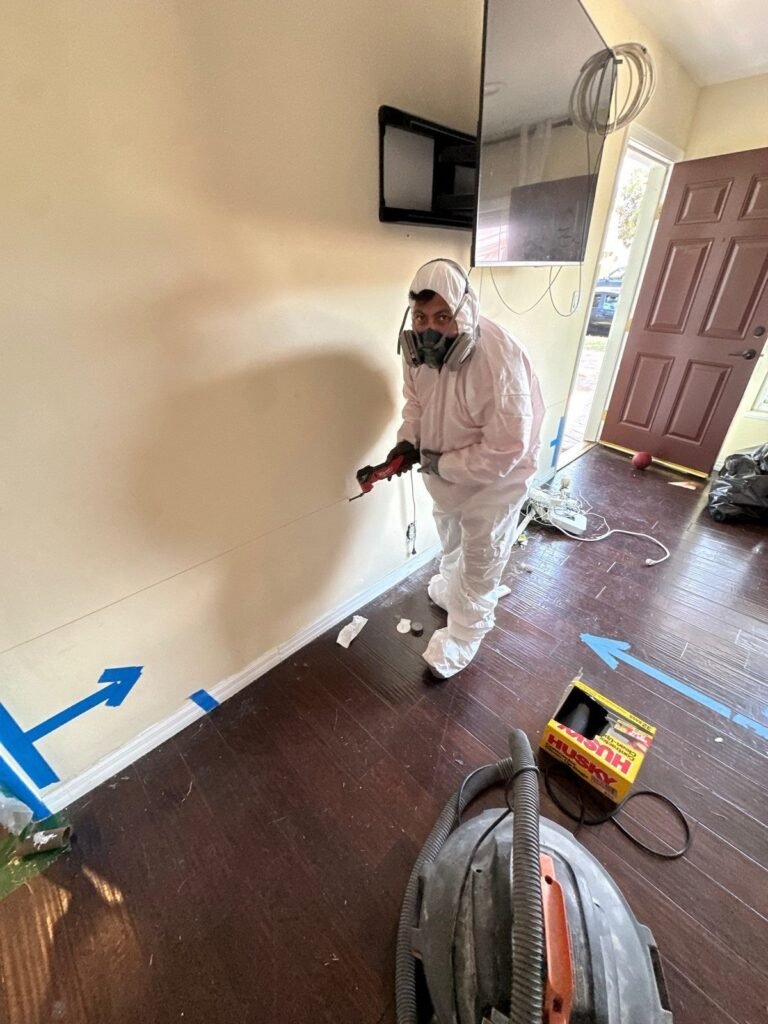
Nothing comes out of a wall in a house this old until that sample comes back, and what gets tested first lays out who has to be told before it does.
Fillmore has put the odds in writing. Its own housing element, the one California’s housing department signed off on, counts 69.5 percent of Fillmore homes built before 1979, with 1970 through 1979 standing as the single biggest decade at 23 percent. Go further back and the town is a genuine outlier: 645 homes date to 1939 or earlier, 12.3 percent of the stock, against 3.4 percent for the county as a whole.
At 3.6 times the county rate, that means balloon framing, raised foundations, plaster over lath, and lead paint sitting under the newer coats. That same document counts about 250 homes needing rehabilitation and about 15 needing major work or replacement. In a town built like that, the age of the house is the first thing read on a job, not the last.
No. Fillmore publishes no drywall threshold at all.
Small patch or whole room, there is no square footage you can point to and call the work exempt. The permit application, the owner-builder advisement, the fee schedule, and the valuation sheets carry no exemption list of any kind. What Fillmore does publish is the opposite instruction, in one line: contact Building and Safety staff before proceeding with any construction work. Ignore the ten square yards figure floating around online. It exists in no city in this county. The default the Contractors State License Board points to is plain enough, that no structure gets repaired, altered, or demolished before a permit is issued for it.
Then two things nobody warns you about. Fillmore publishes no plan check turnaround, so any company quoting you a number of weeks is making it up. And while city staff issue the permit, plan check and inspection are contracted out to Bureau Veritas, whose inspectors are on the ground ten and a half hours in a week, spread across three days, with the counter dark on alternating Fridays.
Plans get reviewed against the 2025 edition of the California Building Standards Code, in force from 2026. If the structure stands inside the special flood hazard area, substantial damage rules ride on top of the ordinary permit, and Fillmore runs that analysis itself as flood insurance community 060415.
One last trap: cross the Santa Clara River south into Bardsdale and you have left the city, so Ventura County’s Resource Management Agency issues the permit instead. A 93015 ZIP code does not settle who your building department is. We pull the paperwork for the rebuild half of the job under CSLB #1131134, and we schedule around that inspection window rather than pretend it is not there.
Because the ground under Fillmore hands the moisture back.
The state has already described why. The Fillmore subbasin, numbered 4-004.05 and covering roughly 21,700 acres, is pinched between rock constrictions at either end, which pushes groundwater up toward the surface instead of letting it drain off. It recharges quickly and fills to capacity in wet years; in 1999 it was estimated at 95 percent full, and its levels have held within five feet of the historic high. Near the line between Fillmore and Santa Paula there is a stretch of river where water rises year round, dry years included.
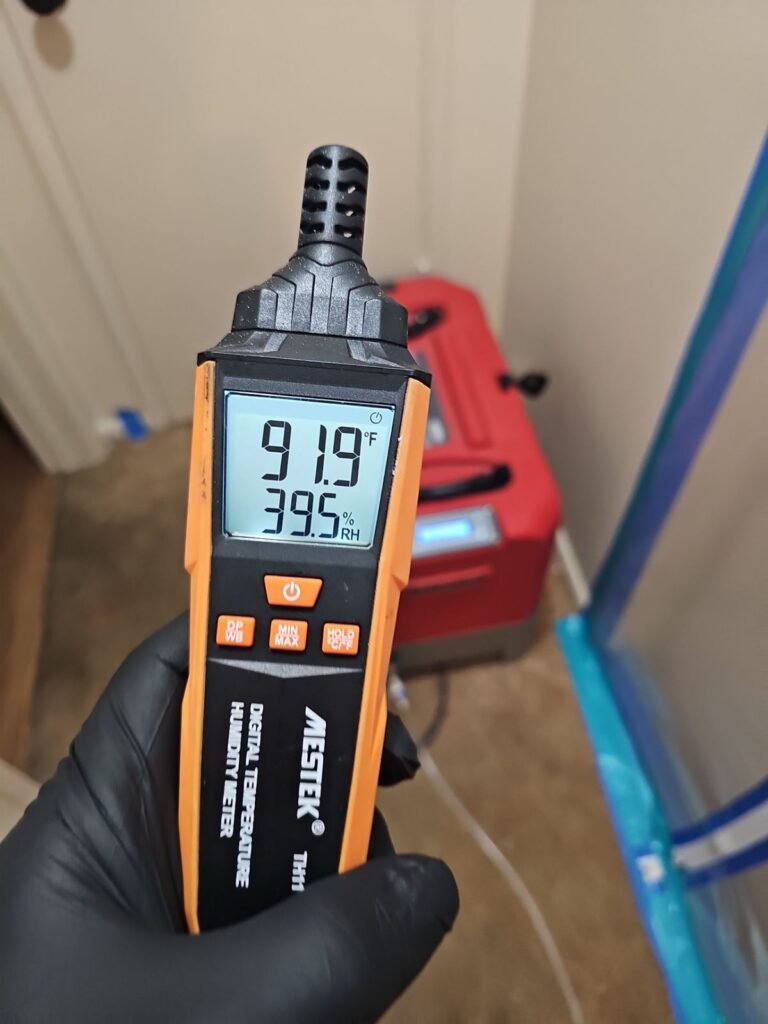
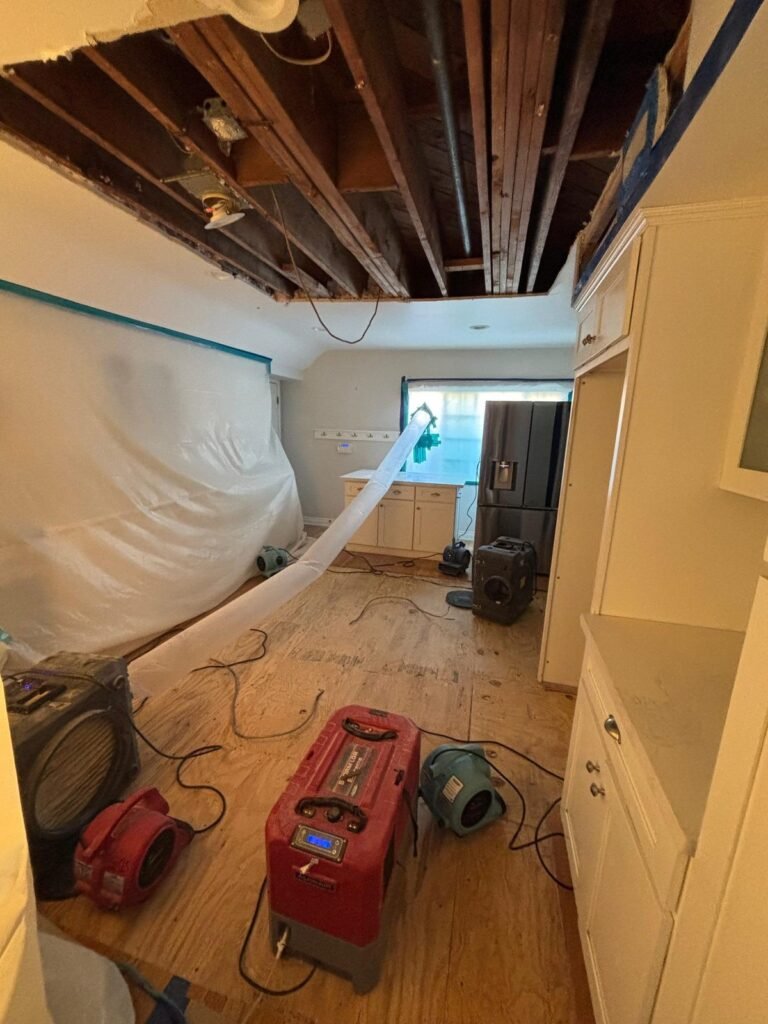
Set a raised wood floor on top of a crawl space in a basin behaving like that, and a row of fans in the living room accomplishes very little. Drying gets measured under the floor, not on top of it. Often the answer is a vapor retarder and controlled air below the house rather than more equipment upstairs, and that call is made with a meter rather than a hunch.
We do, and in Fillmore that call comes in far more often than in any city nearby.
Mobile homes make up 9.7 percent of the housing here, 508 units out of 5,259, better than double the 4.1 percent countywide and close to triple the statewide share.
A mobile home is not a small house. Its floor rides on steel beams, the insulation is loose fiber in the cavity, and underneath everything sits the belly wrap, a plastic membrane built to keep road spray out that turns out to be excellent at keeping a leak in. Water from a split supply line or a failed seal ends up in that membrane and stays, out of sight and warm, doing what you would expect. Blowing air across the floor above never reaches it.
The wrap gets opened, the soaked batt comes out, the cavity gets dried and read, then it goes back together. Two thirds of Fillmore households own their home, so the person calling can usually authorize the work, which saves a day nobody has to spare.
An official damage inspection, before anybody scopes the rebuild.
Fillmore carries a code section no other city in this county carries. Local Section 109.7 calls for a damage inspection after any fire that harmed structural, plumbing, electrical, or mechanical systems, so a fire loss in this town opens with the building being read rather than with a quote.
The city also runs its own fire department rather than joining the county district, staffed by five paid members and sixty volunteers, one of only three cities in Ventura County standing outside it. In 2025 the council adopted CAL FIRE’s local responsibility area hazard map exactly as issued, without raising a single zone, and on the parcels it designates, Chapter 7A material rules follow the rebuild in.
About the smell itself: odor does not live on the surface. It lives in attic insulation, inside wall cavities, and on bare framing, which is why a fire put out in the cold months comes back at you on the first hot afternoon of the following season. The Thomas Fire burned 281,893 acres and took 1,063 structures across the winter of 2017 and 2018, and this valley learned what that does to an attic. Odor gets removed and sealed off, never covered over.
In Fillmore the odds sit on your side of the property line.
The numbers say why. The city has reported 115,285 gallons of sewage spilled since 2009, and 109,985 of those gallons came out of a single structural pipe failure in 2023 that emptied into a separate storm drain. That lone event accounts for roughly 95 percent of everything the collection system has released in fifteen years. A system that quiet rarely fails into your tub. The tub is simply the lowest opening in the house, so a blocked lateral, meaning the buried pipe your deed makes yours rather than the city’s, surfaces there first.
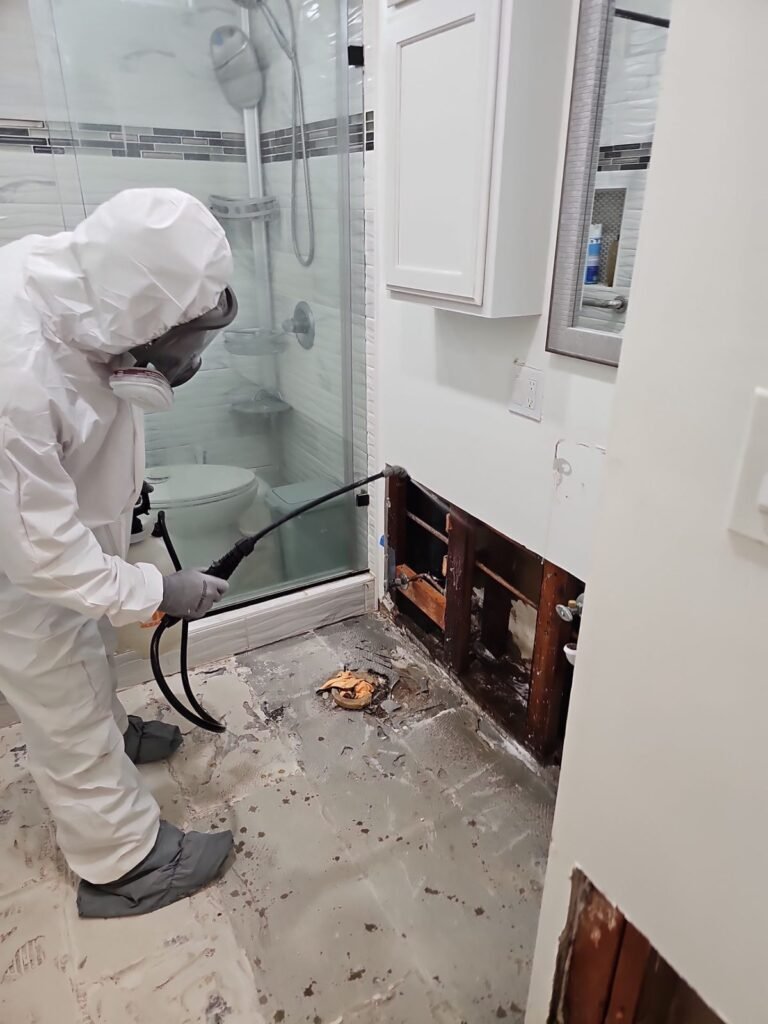
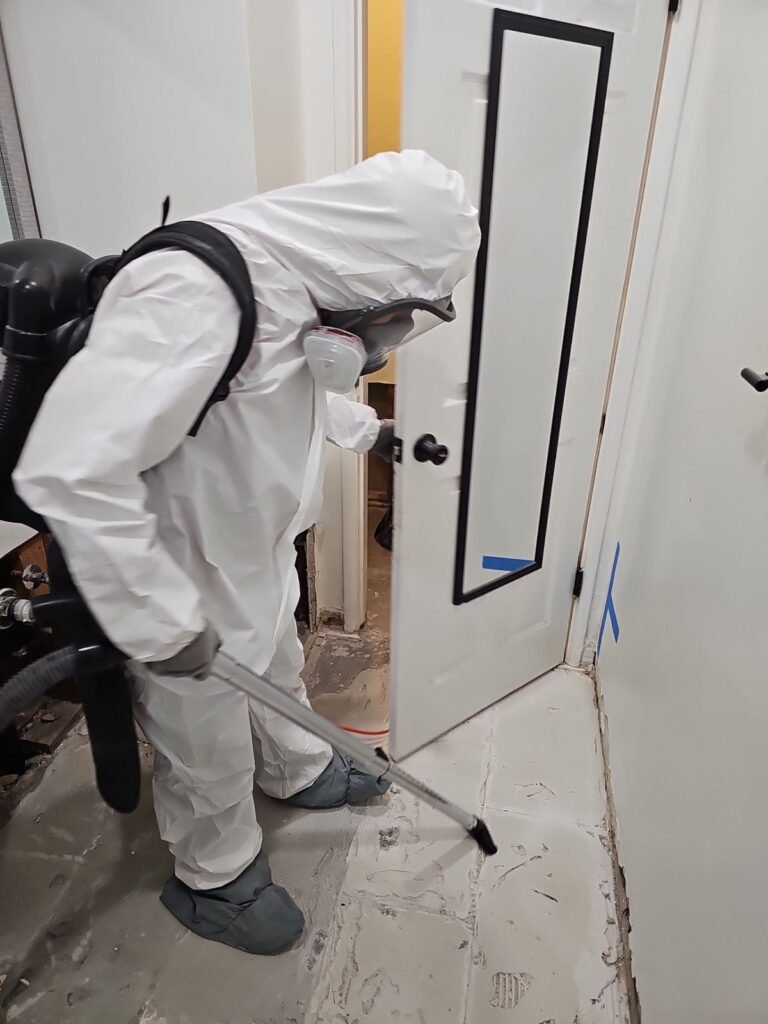
Whose pipe it is decides who pays, and that gets argued afterward. It changes nothing about the water, which is category three from the moment it rises through a drain: contaminated, which makes it a removal job before it is a drying job. Porous material leaves the building, every hard surface gets scrubbed and disinfected, and we photograph and log how far the spill traveled, because a claim turns on documentation rather than on anybody’s recollection.
When it happens, get us on the phone. Our dispatcher takes the address, the nearest crew drives out, puts a meter on the material, and tells you what is genuinely wet. That visit costs nothing and obligates you to nothing.
The room is ours. Three things are not.
The drying and demolition run under IICRC #70194273 and the rebuild under CSLB #1131134, so the same company that cut the wall open brings back the framing, insulation, drywall, texture, paint, trim, and floor. What we cannot do is sign off on it. In Fillmore the inspection belongs to Bureau Veritas working under contract to the city and the permit belongs to city staff; we book the slot and meet the inspector, but the approval is theirs to give.
Nor do we decide your claim. We meter, photograph, and itemize what the loss actually destroyed, and your insurance company rules on it from its own side of the table. And we do not read our own samples: a laboratory reads a sample and tells us whether a cavity came back clear, with its accreditation number on the page instead of ours. That distance is the whole value of the paper.
If the water never touched it, it belongs to a separate contract, which is the honest answer to whether the kitchen can grow while the wall is open.
Further up the same river valley, surrounded by orchards. Its building code carries a fire damage inspection rule that none of the other nine cities has written down.

Your phone number is the only thing we really need. Everything else just helps us send the right crew with the right equipment.
Call (805) 427-9039 from anywhere in Fillmore and tell our dispatcher which street you are standing on. What you should be left with is a crawl space that reads dry under the floor, a folder you never had to assemble yourself, and a wall nobody can tell was ever opened.