
In an Oxnard rental the structure is the owner’s to dry and put back. Everything you carried through the door is yours to inventory and claim. The work order belongs to whoever holds title, not to whoever holds the lease.
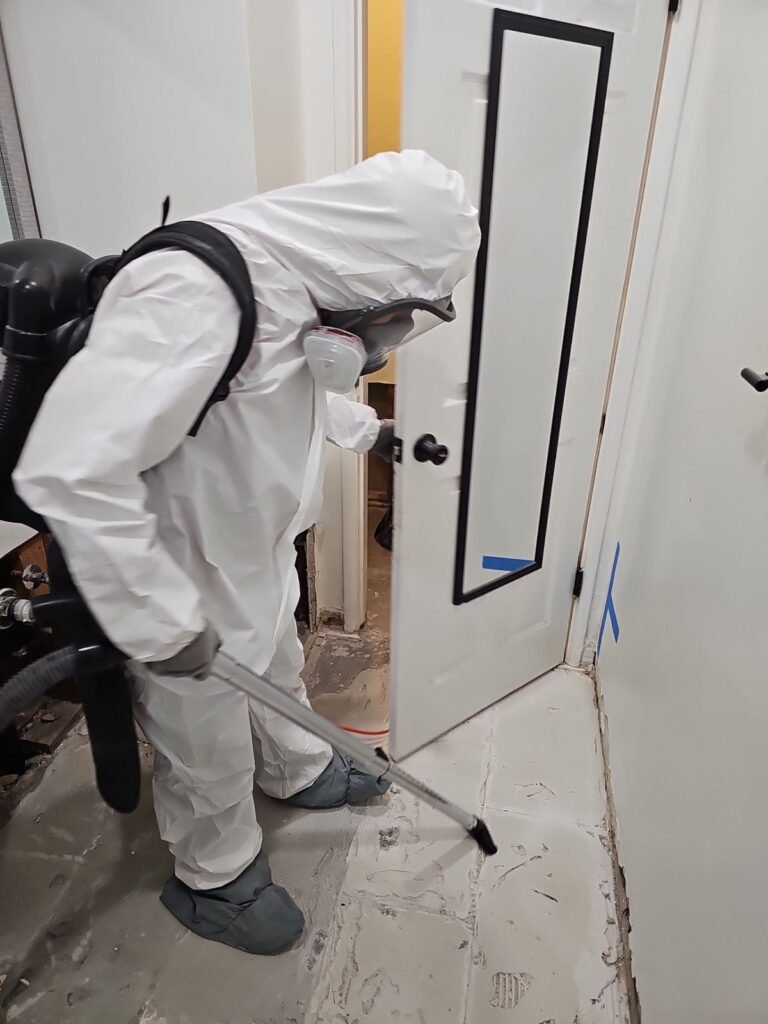
Because the building is somebody else’s asset.
A contract to repair it has to be signed by the person who owns it. That is how California writes a home improvement contract.
A lease does not make a tenant the owner of the walls. What you hold instead is notice.
Notice is worth more than people think, so put it in a form that stamps itself.
Email, the tenant portal, a text you keep.
Call at whatever hour it is too, then follow the call with three sentences you can produce later.
State law does not let a rental sit uninhabitable. A saturated subfloor with water through a ceiling fixture is not a close call.
What that duty means against the exact wording of your lease belongs with a tenant legal aid office.
About where you expect, until the two halves touch.
The shared hallway and laundry room are the owner’s, but whatever you stored there is still on your list.
The blinds hanging in the window when you got the keys are the building. The bookcase you pushed against them is yours.
More than feels reasonable, inside the first hour.
This version of the room stops existing tomorrow.
Write the notice that same night and keep your sent copy, not a screenshot of theirs.
List the damaged belongings with roughly what each cost and roughly when you bought it. Rough beats blank.
Keep every receipt that exists only because of this night. The laundromat, the room you had to take, the dinner nobody would otherwise have bought.
Ask in writing, and expect the answer to depend.
That file is the property of whoever signed the crew’s contract.
Asking on paper costs nothing and sometimes it simply arrives.
Two things, and the second gets forgotten.
The first is personal property, the money side of the list you just started.
The second is loss of use. Somewhere else to sleep, and the extra cost of feeding yourself while your kitchen holds equipment.
The owner’s policy is not standing behind your side of the door. It protects their interest in the structure, and sometimes the rent that stops arriving.
Your mattress was never on it.
Your declarations page, and nowhere we can see.
What yours pays, up to what limit, and whether it settles at replacement cost or at used value.
Go read those limits yourself. A number invented by a restoration company is worse than none.
Two questions, while everyone is still reasonable.
Is the rent coming down for the nights the unit cannot properly be lived in?
Will the owner put anything toward a room somewhere? Neither happens by itself, and both settle easier before the invoices land.
The order a claim moves in sits on the claim page.
It changes everything, and it is the expensive word.
A burst supply line under your sink and water arriving from outside are two separate perils.
A renters policy is not a flood policy. Flood, as the federal program defines it, is sold on its own.
That program writes contents-only coverage for people who do not own their building.
Yes. Class 7 in the federal rating system.
It is one of only three Ventura County communities enrolled. The rating discounts flood premiums fifteen percent inside the hazard area and five outside.
The city buys that discount by enforcing floodplain rules stricter than the federal minimum.
Those rules resurface if the unit gets rebuilt rather than dried.
Being off the map is not the same as being dry.
Of the paid federal flood claims in Oxnard ZIP codes, 65 out of 98 were rated outside the high-risk zone.
Countywide, of 7,333 homes mapped inside that zone, only 2,264 carry a policy.
One correction, because it circulates locally and gets used wrong. The 2024 federal map revision did not touch Oxnard’s panels.
The effective map here is still the one from 2021, and that is what the insurer’s adjuster works from. Oxnard also carries coastal velocity zone, continuing into Port Hueneme.
Because of when your building went up.
The median Oxnard home was built in 1977, and 33,447 of the city’s 59,503 housing units predate 1980.
In a rental that old, nothing gets cut until a laboratory answers. The owner orders that sample, not the tenant.
Drying itself is measured, never scheduled. Meters decide when the equipment leaves, and the outside air here offers no help.
A normal Oxnard year brings 12.93 inches of rain and only 2.4 days at 90 degrees or hotter. Mild place to live, slow place to dry a building.
Completely, and squeamishness has nothing to do with it.
Water that has been inside a sewer line is treated as contaminated from the first minute.
That changes the gear, the containment, and what goes to the dumpster instead of getting dried.
This is not rare here. Oxnard’s wastewater division reported 54 sanitary sewer overflows to the state, totaling 45,145 gallons.
Cooking grease caused 34 of them. Grease is a kitchen habit, so the backup landing in your unit often started nowhere near it.
Anything porous, and photographing it is your half.
Carpet pad, particleboard furniture, mattresses, upholstery and anything made of paper are losses, not cleaning projects.
Photograph each one before it leaves, because your side of the claim needs the picture, not the object.
Stop running the washer, the dishwasher and the toilets until somebody has looked at the line.
What the crew does when it arrives sits on the sewage page.
A work order for a building you only rent.
If a crew hands you one, forward it up rather than sign it.
Signing can put you personally behind a bill on somebody else’s asset. Far harder to unwind than to avoid.
Read whatever you do sign, at whatever hour it is.
Three business days, or seven after a disaster.
Five if the buyer is a senior citizen. Seven when the contract is to repair a residence damaged by a disaster.
That window exists because people sign things in the middle of the worst night of their year.
One fast test of who is in your doorway. Every construction contract and every form of advertising has to carry the contractor’s license number.
The state counts a website as advertising. Ours are CSLB #1131134 on the construction side and IICRC #70194273 on the mitigation side.
Yes. You are not a bystander in it.
The statute punishing fraud in disaster repair work names the tenant right beside the owner.
A court must order full restitution to whoever was defrauded.
Three, and none of them is a tenant’s or ours.
Putting the wall back together is our half: insulation, drywall, texture, paint, baseboard, doors, flooring, cabinets and counters.
The first signature is written by whoever pays. We arrive with meters, photographs and an itemized scope.
What we hand over is a record, not a ruling on what is owed. An insurance company reads it and signs its own conclusion.
The second is written by a laboratory. Whether a ceiling texture in a seventies building counts as asbestos is the analyst’s answer.
A city inspector, and it sets your calendar.
Oxnard clears 95 percent of first plan check reviews within nine weeks. Its express lane runs two to four weeks, and that clock starts when the owner submits.
Its counter treats drywall patching under fifty square feet as permit-free where the assembly is not fire-rated.
That is a courtesy the city can pull back. Which is why a small patch closes in an afternoon and a real repair does not.
What the meters read is on the restoration page, and the rest in the guides.
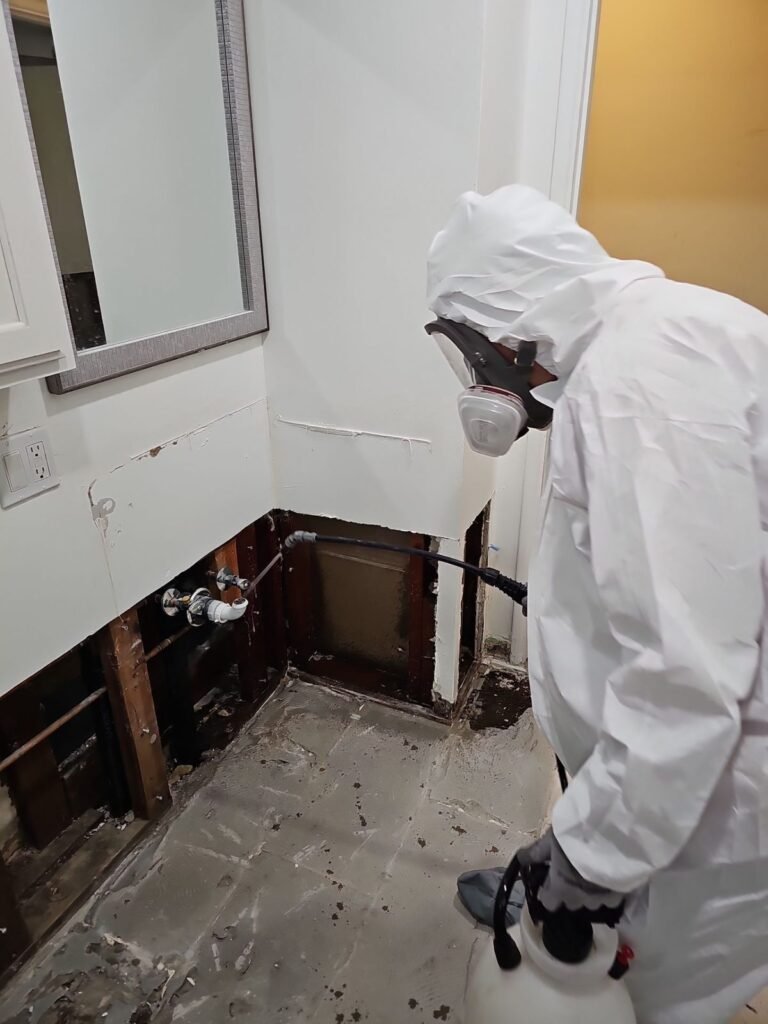
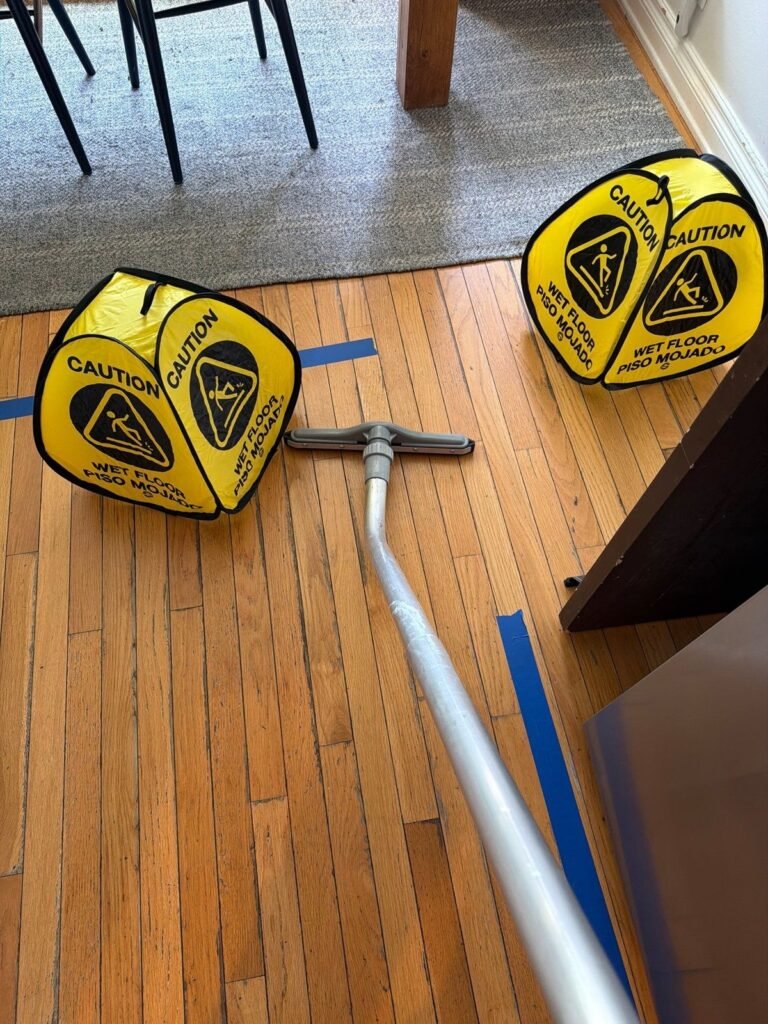
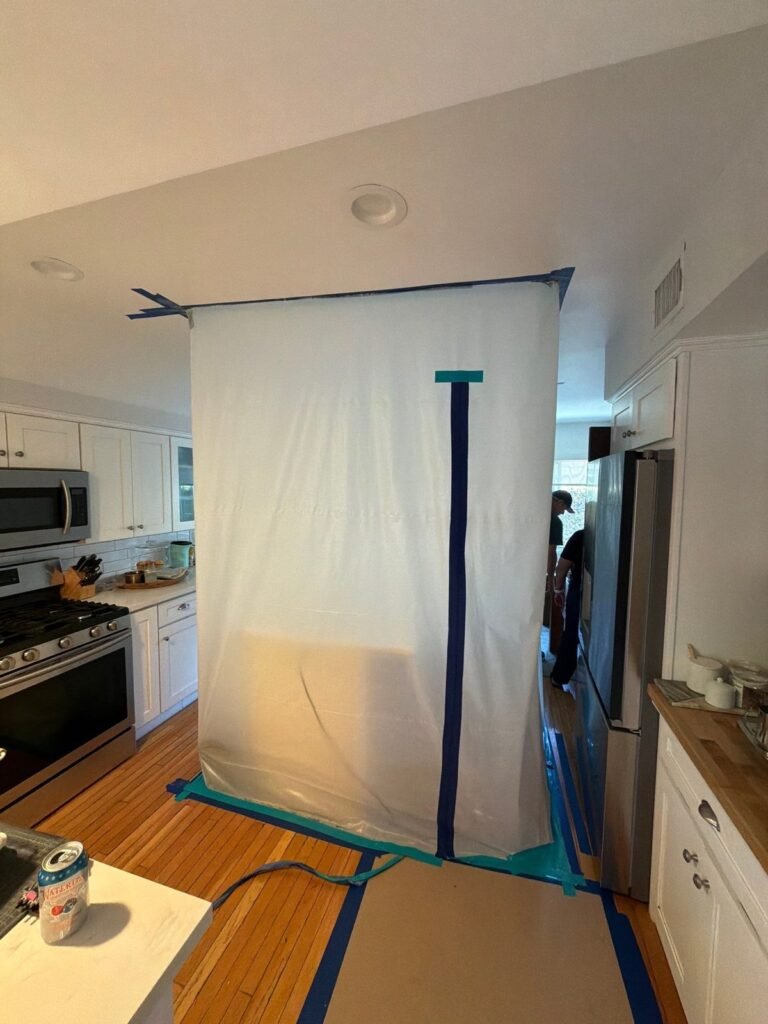
Looking costs nothing, and you should walk away holding your own inventory, your own photographs, and a room somebody else had to sign for.